
Starting and managing an LLC comes with more than just filing Articles of Organization and opening a business bank account.
Business owners also need to understand federal reporting rules, especially when those rules affect company ownership records.
One of the most discussed compliance topics in recent years has been Beneficial Ownership Information, commonly known as BOI.
BOI reporting was introduced under the Corporate Transparency Act to help the U.S. government identify the real individuals who own or control certain companies.
The goal was to reduce the misuse of anonymous business entities for illegal activities such as money laundering, tax fraud, and financial crime.
For a while, many small LLC owners were told they needed to file a BOI report with FinCEN. This created confusion for millions of small businesses, freelancers, real estate investors, online sellers, and local business owners.
However, the rules changed significantly.
As of 2026, most LLCs formed in the United States are not required to file a BOI report with FinCEN. Domestic U.S. LLCs are currently exempt from BOI reporting requirements under FinCEN’s updated rule.
That said, BOI still matters. Some foreign companies registered to do business in the United States may still need to file.
Also, business owners should understand what a BOI is, who qualifies as a beneficial owner, what information may be required, and how the filing process works, if applicable, for their company.
In this guide, you will learn how BOI filing works for LLCs in 2026, who needs to file, who is exempt, what information is required, and how to submit a BOI report if your business is still covered.
What Is Beneficial Ownership Information (BOI)?
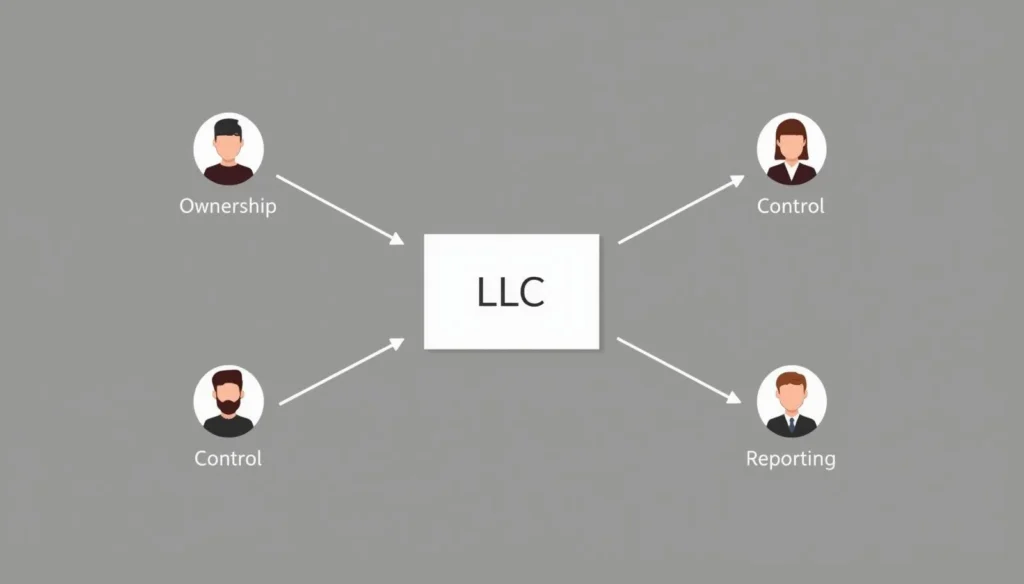
Beneficial Ownership Information, or BOI, refers to details about the real people who own or control a company.
In simple words, BOI tells the government who is actually behind a business entity.
For an LLC, beneficial ownership information usually includes details about individuals who either own a majority of the company or have significant control over its decisions.
A beneficial owner may be someone who:
• Owns or controls a significant percentage of the LLC
• Has major decision-making authority
• Controls the company directly or indirectly
• Has power over important business decisions
• Acts as a senior officer or key controlling person
BOI reporting was created to make it harder for people to hide behind anonymous companies.
The government wanted to collect ownership details for certain companies so law enforcement and financial regulators could better identify who controls a business.
For small LLC owners, this became a major compliance topic because many LLCs were originally expected to report ownership details to FinCEN.
What Is FinCEN?
FinCEN stands for the Financial Crimes Enforcement Network.
It is a bureau of the U.S. Department of the Treasury. FinCEN collects and analyzes financial information to help fight money laundering, fraud, terrorist financing, and other financial crimes.
BOI reports are filed with FinCEN, not with the IRS or the Secretary of State.
This is important because many LLC owners confuse BOI reporting with tax filing or state business filing. BOI reporting is separate from:
• LLC formation filing
• Annual reports
• State franchise taxes
• IRS tax returns
• Business licenses
• Sales tax registration
Even if your LLC is registered with the state and has an EIN, that does not automatically mean you have filed BOI. These are separate processes.
Do U.S. LLCs Need to File a BOI Report?

As of 2026, most LLCs formed in the United States do not need to file a BOI report with FinCEN.
This is the most important update for small business owners.
Domestic companies, including LLCs created under U.S. state law, are currently exempt from BOI reporting requirements.
This means if you formed your LLC in a U.S. state such as Florida, Texas, Wyoming, Delaware, California, New York, Nevada, or any other state, your LLC generally does not need to file a BOI report under the current rule.
This is a major change from earlier guidance, when many domestic LLCs were expected to file.
However, this does not mean BOI is irrelevant. The rule can still apply to certain foreign entities registered to do business in the United States.
Who Still Needs to File BOI in 2026?
The BOI filing now mainly applies to certain foreign reporting companies.
A foreign reporting company is generally a company formed under the law of another country that is registered to do business in a U.S. state or tribal jurisdiction.
For example, a company formed in another country that registers to do business in Texas, Florida, Delaware, or another U.S. state may need to file a BOI report if it does not qualify for an exemption.
Here is a simple breakdown:
| Business Type | BOI Filing Required in 2026? |
|---|---|
| LLC formed in a U.S. state | Usually no |
| Corporation formed in a U.S. state | Usually no |
| Single-member U.S. LLC | Usually no |
| Multi-member U.S. LLC | Usually no |
| Foreign company registered to do business in the U.S. | May be required |
| Foreign company not registered in the U.S. | Usually no FinCEN BOI filing |
| U.S. person who owns a domestic LLC | Usually no BOI filing |
If your business is a standard U.S.-formed LLC, you likely do not need to file a BOI report in 2026.
If your business is a foreign company registered in the U.S., you should review the BOI rules carefully.
Why Did BOI Filing Rules Change?
The BOI reporting rules changed because FinCEN issued an updated interim final rule in 2025.
Before this change, many small businesses were expected to report beneficial ownership information.
This included millions of LLCs, corporations, and other small business entities.
The rule created confusion because many business owners were unsure whether they had to file, when they had to file, what information was required, and what penalties applied.
After legal challenges and policy changes, FinCEN narrowed the reporting requirement. Domestic U.S. companies and U.S. persons were removed from the BOI filing requirement.
As a result, the current BOI filing obligation is much narrower than the original version.
Who Is a Beneficial Owner? Understanding Beneficial Owners
A beneficial owner is an individual who owns or controls a company.
For BOI purposes, a person may be considered a beneficial owner if they have an ownership interest or substantial control.
This can include people who directly own the company, indirectly own it through another entity, or control important decisions.
A beneficial owner may include:
• An individual who owns a significant percentage of the company
• A person with the authority to make major business decisions
• A senior officer
• A manager with major control
• Someone who controls ownership through another company or agreement
For LLCs, beneficial owners are often the members or managers.
For example, if two people own an LLC equally, both may be beneficial owners.
If one person owns 80% and another owns 20%, the majority owner is usually a beneficial owner, and the second owner may also be considered one, depending on the rules that apply.
If a person does not own the company but has strong control over business decisions, that person may also qualify as a beneficial owner.
What Is Substantial Control?
A person may have substantial control if they can make important decisions for the company.
This may include authority over:
• Business strategy
• Major contracts
• Company finances
• Sale or transfer of company assets
• Appointment or removal of managers
• Company structure
• Important operational decisions
For an LLC, substantial control may be held by a managing member, manager, CEO, president, or another person with significant authority over the company.
Ownership is not the only test. Control matters too.
That means someone can be a beneficial owner even if they do not own a large percentage of the LLC, as long as they have major control over the business.
BOI Exemptions for LLCs and Companies
Under the current 2026 rule, domestic U.S. companies are generally exempt from BOI filing.
This includes LLCs formed in U.S. states.
However, even before the updated rule, some companies were already exempt from BOI reporting because they were already regulated or publicly visible.
Common exempt company types may include:
• Large operating companies
• Public companies
• Banks
• Credit unions
• Insurance companies
• Registered investment companies
• Accounting firms
• Tax-exempt entities
• Certain inactive entities
• Governmental authorities
The exemption rules can be detailed, especially for foreign entities. If your company is not a simple U.S.-formed LLC, it is worth reviewing the exemption categories carefully.
What Information Is Required for BOI Filing?

If your company is required to file a BOI report, you may need to provide information about the company and its beneficial owners.
The exact information may include company details and personal details for each reportable beneficial owner.
Company Information
The company may need to provide:
• Legal business name
• Trade names or DBA names
• Business address
• Jurisdiction of formation
• U.S. registration jurisdiction, if foreign
• Taxpayer Identification Number
For a foreign reporting company, the filing may also ask for details about where the company is registered to do business in the United States.
Beneficial Owner Information
For each beneficial owner, the report may require:
• Full legal name
• Date of birth
• Residential address
• Identifying document number
• Image of identification document
Accepted identification documents may include a passport, state ID, driver’s license, or other approved government-issued identification.
The information must be accurate. Incorrect details can create filing problems and may need correction.
How to File BOI for Your LLC? Step-by-Step BOI Filing Process
If your LLC or company is required to file BOI, the filing is completed through FinCEN’s BOI reporting system.
Most standard U.S. LLCs do not need to complete this process under the current rule.
However, if your company is a foreign reporting company or otherwise required to file, here is the general process.
Step 1: Confirm Whether Your LLC Must File
Before doing anything else, confirm whether your company is actually required to file.
This is the most important step because many U.S.-formed LLCs are now exempt.
Ask these questions:
• Was the company formed in a U.S. state?
• Was the company formed in another country?
• Is the foreign company registered to do business in a U.S. state?
• Does the company qualify for an exemption?
• Are the owners U.S. persons or foreign persons?
• Has the company already filed BOI before?
If your LLC was created in the United States, it usually does not need to file.
If your company was created outside the United States and registered to do business in a U.S. state, BOI filing may still apply.
Step 2: Identify the Beneficial Owners
If your company must file, identify every beneficial owner.
This may include people who own the company and people who control the company.
Review ownership percentages, management authority, voting rights, and control rights.
For an LLC, you may need to review:
• Members
• Managers
• Managing members
• Officers
• People with voting control
• People with control through agreements
• People who indirectly own the LLC through another entity
Do not only look at the names on the Articles of Organization. Some states do not list all owners in public filings.
You may need to review the operating agreement, membership records, ownership ledger, and internal company documents.
Step 3: Collect Company Information
Next, collect your company details.
You may need:
• Legal company name
• DBA or trade names
• Principal business address
• Formation jurisdiction
• U.S. registration jurisdiction
• Tax ID number
• Business structure details
Make sure the information matches your official formation documents.
If your company name, address, or tax ID is entered incorrectly, the report may need to be corrected later.
Step 4: Collect Beneficial Owner Information
After identifying beneficial owners, collect required personal details for each person.
This may include:
• Full legal name
• Date of birth
• Current residential address
• Identification number
• Copy or image of ID document
Make sure the ID is valid and not expired.
The name on the BOI report should match the identification document. If there are spelling differences or outdated addresses, fix them before filing.
Step 5: Access the FinCEN BOI Filing System
BOI reports are filed electronically through FinCEN’s reporting system.
The filing is not submitted to your state government. It is not filed with the IRS. It is not part of your annual report.
Before starting, keep all company and owner details ready.
You may be able to file directly online or prepare the report and submit it through the system.
Step 6: Complete the BOI Report
Once inside the BOI filing system, enter the required company information and beneficial owner details.
Review every field carefully.
Common filing details may include:
• Reporting company name
• Business address
• Tax ID number
• Formation or registration jurisdiction
• Beneficial owner names
• Beneficial owner addresses
• Identification document details
• Uploaded ID images, if required
Take your time while completing the report. A small mistake can create unnecessary correction work.
Step 7: Review Before Submitting
Before submitting, review the full report.
Check:
• Company name spelling
• EIN or tax ID number
• Business address
• Beneficial owner names
• Dates of birth
• ID numbers
• Uploaded identification images
• Ownership and control details
It is better to spend a few extra minutes reviewing than to correct the report later.
Step 8: Submit the BOI Report
After reviewing the report, submit it through the BOI filing system.
Once submitted, save the confirmation or transcript for your company records.
Keep it with your LLC documents, such as:
• Articles of Organization
• Operating agreement
• EIN confirmation letter
• Business license records
• Annual report filings
• Tax records
Good recordkeeping makes future compliance easier.
Step 9: Update or Correct the Report if Needed
If your company is required to file BOI and the information changes, you may need to update or correct the report.
Changes may include:
• New beneficial owner
• Change in ownership percentage
• Change in substantial control
• Change in company address
• Change in beneficial owner information
• Incorrect information filed earlier
Under the current rule, domestic U.S. LLCs generally do not need to update BOI reports because they are exempt. But foreign reporting companies that remain covered may still have update obligations.
BOI Filing Deadlines: When Do You Need to File BOI?
For most U.S.-formed LLCs, there is currently no BOI filing deadline because domestic companies are exempt.
For foreign reporting companies, deadlines depend on when the company was registered to do business in the United States.
A foreign reporting company already registered before the updated rule may have had a specific deadline. A foreign reporting company registered after the rule may have a set number of days after registration approval to file.
Because BOI deadlines have changed multiple times, business owners should always check the current deadline before filing.
Here is a simplified view:
| Company Type | BOI Filing Deadline |
|---|---|
| U.S.-formed LLC | Usually no filing required |
| U.S.-formed corporation | Usually no filing required |
| Foreign company registered in the U.S. | Deadline depends on registration date |
| Exempt company | No filing required |
| Foreign company not registered in the U.S. | Usually no FinCEN BOI filing |
If you are unsure, do not guess. BOI deadlines can be strict for companies still required to file.
What Happens If You Do Not File BOI?
For companies that are required to file, failing to submit BOI information can lead to penalties.
However, for domestic U.S. LLCs that are currently exempt, BOI non-filing is generally not an issue under the current rule.
The risk applies mainly to businesses that are still required to file, such as certain foreign reporting companies.
If your company must file and ignores the requirement, it may face:
• Civil penalties
• Possible enforcement action
• Compliance problems
• Difficulty during banking or business verification
• Legal risk for willful non-compliance
This is why it is important to first confirm whether your LLC or company is covered.
Do You Need a Lawyer to File BOI?

Many simple BOI filings can be done without a lawyer if the company clearly understands its ownership structure.
However, legal help may be useful if:
• Your company has multiple owners
• Ownership is held through another company
• You have foreign owners
• Your company is registered in multiple states
• You are unsure who qualifies as a beneficial owner
• Your company has complex control rights
• You are not sure whether an exemption applies
For most U.S.-formed LLCs, the bigger question is not how to file BOI, but whether BOI filing is required at all.
As of 2026, many U.S. LLC owners will not need to file.
Should You Use a BOI Filing Service?
Some companies offer BOI filing services to help business owners submit reports.
A BOI filing service may help with:
• Collecting owner information
• Preparing the report
• Submitting the filing
• Tracking deadlines
• Keeping copies of confirmations
• Sending update reminders
However, if your LLC is a domestic U.S. LLC, you likely do not need a BOI filing service under the current rule.
Before paying any provider, confirm whether your company actually has a filing requirement.
This is especially important because some websites may still show outdated BOI guidance from 2024 or early 2025.
Common BOI Filing Mistakes to Avoid
BOI filing can be simple when ownership is clear, but mistakes can happen.
Here are common mistakes business owners should avoid.
1. Filing When Your LLC Is Exempt
Many U.S. LLC owners still think they need to file BOI because they read old information online.
Under the current rule, most domestic LLCs are exempt.
Before filing, confirm whether your company is actually required to report.
2. Assuming BOI Is an IRS Filing
BOI is not an IRS tax filing.
It is filed with FinCEN. It is separate from your federal tax return, EIN application, annual report, and state tax filing.
3. Listing Only Owners and Ignoring Control
Beneficial ownership is not only about ownership percentage.
A person with major control over the company may also qualify as a beneficial owner.
This is especially important for manager-managed LLCs or companies with complex control structures.
4. Using Incorrect Owner Information
Wrong names, outdated addresses, expired ID documents, or incorrect ID numbers can create problems.
Always use accurate and current information.
5. Forgetting to Save Confirmation
If your company files BOI, save the confirmation.
Keep it with your business records so you can prove the report was submitted.
6. Relying on Outdated Guidance
BOI rules changed significantly.
Many old articles, videos, and compliance reminders may still say every LLC must file. That is no longer accurate for most U.S.-formed LLCs.
Always rely on current guidance.
BOI Filing Checklist
Use this checklist if your company may need to file BOI.
| Step | Task |
|---|---|
| 1 | Confirm whether your company is required to file |
| 2 | Check whether your company qualifies for an exemption |
| 3 | Identify all beneficial owners |
| 4 | Review ownership and control rights |
| 5 | Collect company information |
| 6 | Collect beneficial owner details |
| 7 | Prepare identification documents |
| 8 | Access the FinCEN BOI filing system |
| 9 | Complete the BOI report |
| 10 | Review all details carefully |
| 11 | Submit the report |
| 12 | Save confirmation for your records |
| 13 | Track future update requirements if applicable |
BOI Filing for Single-Member LLCs
A single-member LLC is owned by one person.
Under the current 2026 rule, a single-member LLC formed in the United States generally does not need to file a BOI report.
If BOI filing did apply, the single owner would usually be the beneficial owner because they own and control the LLC.
However, because domestic U.S. LLCs are currently exempt, most single-member LLC owners do not need to submit BOI information to FinCEN.
BOI Filing for Multi-Member LLCs
A multi-member LLC has two or more owners.
Under the current rule, a U.S.-formed multi-member LLC generally does not need to file BOI.
If BOI filing applied, the LLC would need to identify people who own or control the company.
This could include:
• Members with significant ownership
• Managing members
• Managers with control
• People with major decision-making authority
Multi-member LLCs should still keep accurate internal ownership records, even if BOI filing is not required.
Good records help with taxes, banking, disputes, and future compliance changes.
BOI Filing for Foreign-Owned LLCs
A foreign-owned LLC formed in the United States is generally treated as a domestic U.S. entity because it was created under U.S. state law.
Under the current rule, domestic U.S. LLCs are generally exempt from BOI filing, even if the owner is not a U.S. citizen or U.S. resident.
However, foreign owners may still have other tax and reporting obligations. BOI exemption does not remove IRS filing duties, state compliance requirements, banking verification, or tax responsibilities.
If you are a non-U.S. resident who owns a U.S. LLC, you should review your tax filing requirements separately.
BOI Filing for Foreign Companies Registered in the U.S.
A foreign company registered to do business in the United States may still need to file BOI.
This applies when the company was created under foreign law and then registered with a U.S. state or tribal jurisdiction.
For example, if a company formed in another country registers to do business in Delaware, Texas, Florida, or another U.S. state, it may fall under BOI reporting rules.
These companies should review:
• Whether they qualify as a foreign reporting company
• Whether an exemption applies
• Who the beneficial owners are
• Whether any U.S. persons are excluded from reporting
• Filing deadline based on registration date
• Update requirements after filing
Foreign companies should be more careful because BOI filing may still apply to them.
BOI vs EIN: What Is the Difference?
Many LLC owners confuse BOI and EIN, but they are completely different.
| Item | BOI | EIN |
|---|---|---|
| Full name | Beneficial Ownership Information | Employer Identification Number |
| Filed with | FinCEN | IRS |
| Purpose | Reports company ownership details | Identifies business for tax purposes |
| Required for all LLCs? | No, not for most U.S. LLCs in 2026 | Often needed for banking and taxes |
| Used for taxes? | No | Yes |
| Public record? | No | No |
An EIN is still important for most LLCs. BOI filing, under the current rule, is generally not required for domestic U.S. LLCs.
BOI vs LLC Annual Report
BOI filing is also different from an LLC annual report.
An annual report is filed with the state to keep your LLC active and in good standing.
BOI is filed with FinCEN and relates to company ownership information.
| Item | BOI Report | LLC Annual Report |
|---|---|---|
| Filed with | FinCEN | State agency |
| Purpose | Reports ownership information | Updates state business records |
| Applies to most U.S. LLCs in 2026? | Usually no | Depends on state |
| Fee | Usually no direct FinCEN filing fee | State fee may apply |
| Frequency | Initial and updates if required | Annual or periodic |
Even if your LLC does not need to file BOI, it may still need to file an annual report with your state.
FAQs About BOI Filing for LLCs
Do I need to file BOI for my LLC in 2026?
If your LLC was formed in a U.S. state, you generally do not need to file BOI under the current 2026 rule. Domestic U.S. companies are currently exempt.
Who still needs to file BOI?
BOI filing mainly applies to certain foreign companies registered to do business in the United States, unless they qualify for an exemption.
Is BOI filed with the IRS?
No. BOI is filed with FinCEN, not the IRS.
Is BOI the same as an EIN?
No. BOI reports company ownership information to FinCEN. An EIN is a federal tax ID issued by the IRS.
Do single-member LLCs need to file BOI?
A single-member LLC formed in the United States generally does not need to file BOI in 2026.
Do foreign-owned U.S. LLCs need to file BOI?
A foreign-owned LLC formed in a U.S. state is generally treated as a domestic company and is currently exempt from BOI filing. However, the owner may still have separate tax and reporting duties.
What if I already filed a BOI report before the rule changed?
If your domestic U.S. LLC already filed BOI before the exemption, you generally do not need to update or correct that report under the current rule.
Can BOI rules change again?
Yes. BOI rules have changed before, and they may change again. Business owners should check current guidance before making compliance decisions.
Should I pay a company to file BOI for my LLC?
If your LLC is formed in the United States, you likely do not need to pay for BOI filing under the current rule. Confirm your filing requirement before paying any service provider.
Does BOI exemption remove my state LLC requirements?
No. BOI exemption does not remove annual reports, franchise taxes, business licenses, tax filings, or registered agent requirements.
Final Thoughts
BOI reporting has been one of the most confusing compliance topics for LLC owners in recent years.
Originally, many small businesses expected to file ownership information with FinCEN. But the rule changed. As of 2026, most U.S.-formed LLCs do not need to file a BOI report.
This is important for business owners because many outdated articles still say that all LLCs must file. That is no longer the current position for most domestic U.S. companies.
If your LLC was formed in a U.S. state, you are generally exempt from BOI filing under the current rule.
However, if your company was formed outside the United States and registered to do business in a U.S. state, BOI filing may still apply.
The best approach is simple: confirm your company type, check whether an exemption applies, keep accurate ownership records, and stay updated because BOI rules can change.
For most LLC owners in the United States, the key takeaway is clear.
You may not need to file BOI, but you should still understand the rule so you do not follow outdated advice or pay for unnecessary filing services.