
Opening a US business bank account for a remote LLC is one of the most important steps after forming your company.
A remote LLC usually means a US LLC owned or managed by someone who does not physically live near a US bank branch.
In many cases, the owner may be a non-US resident, digital entrepreneur, ecommerce seller, agency owner, consultant, freelancer, software founder, or investor running the business from another country.
A US business bank account helps your LLC receive payments, pay expenses, manage taxes, separate personal and business money, and build a more professional business presence.
Without a business bank account, your LLC may exist legally, but it can be difficult to operate properly.
You may struggle to connect payment processors, receive client payments, pay contractors, manage bookkeeping, or prove that your business is separate from you personally.
The good news is that opening a US business bank account remotely is more possible today than it was a few years ago.
Digital business banking platforms and fintech providers have made it easier for remote LLC owners to apply online.
However, approval is not automatic. Banks and financial platforms must follow strict identity verification, anti-money laundering, and business verification rules.
This means you need the right documents, a clear business purpose, and consistent information across your LLC records.
In this guide, you will learn how to open a US business bank account for a remote LLC step by step, including the documents needed, account options, common requirements, approval tips, and mistakes to avoid.
What Does a Business Bank Account Do for an LLC?
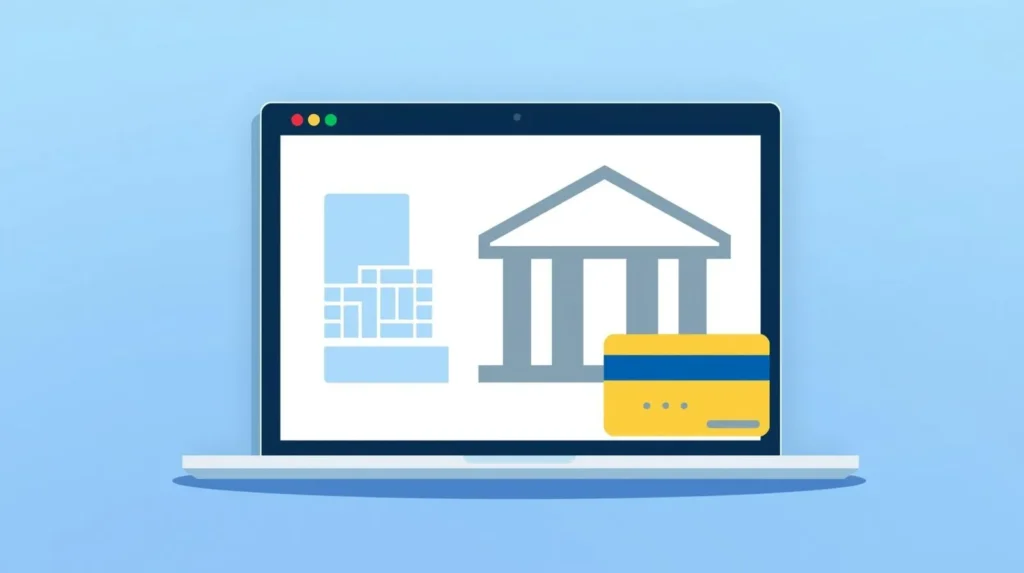
A US business bank account is a financial account opened in the name of your LLC.
Instead of receiving money in your personal account, your business receives income through the LLC bank account.
The account can be used to collect payments, pay business expenses, hold operating funds, manage subscriptions, send wire transfers, and connect with payment platforms.
For an LLC, this is very important because the company is supposed to be separate from its owner.
A business bank account helps your LLC:
• Receive customer payments
• Pay vendors and contractors
• Keep clean financial records
• Track business income and expenses
• Prepare tax filings
• Apply for payment processors
• Build credibility with clients and partners
• Maintain separation between personal and business money
If you mix personal and business money, it can create accounting problems and weaken your liability protection.
A separate account helps show that your LLC is being treated as a real business.
Can a Remote LLC Open a Bank Account Online?
Yes, many remote LLC owners can open a US business bank account online, but it depends on the bank or financial platform.
Some traditional banks still prefer or require an in-person visit, especially for non-US residents. They may ask the owner to visit a branch, provide a US residential address, or show additional identity documents.
Digital banking platforms are usually more flexible. Some online business banking providers allow remote applications for US LLCs, including LLCs owned by non-US residents.
These platforms may still require identity verification, business documents, and proof of business activity.
Here is a simple comparison:
| Account Type | Remote Application Possible? | Best For |
|---|---|---|
| Traditional bank | Sometimes, but often harder | Owners who can visit a branch |
| Online business bank | Often yes | Remote LLC owners and digital businesses |
| Fintech business account | Often yes | Non-US residents, freelancers, ecommerce, agencies |
| EMI or money account | Often yes | Receiving payments and holding multi-currency balances |
A remote application is possible, but you need to choose the right provider.
Why Your Remote LLC Needs a Business Bank Account?
A US business bank account gives your LLC a stronger financial foundation.
Many remote founders form an LLC first and then realize they need a bank account to actually operate the business.
1. To Separate Personal and Business Finances
Your LLC should not use your personal bank account for business activity.
A separate business account helps protect your LLC structure and makes bookkeeping cleaner.
2. To Open Payment Processor Accounts
Many payment processors ask for business banking details.
If you want to use platforms like Stripe, PayPal, Shopify Payments, Amazon, or other business tools, having a US business account can make verification easier.
3. To Receive USD Payments
A US business bank account makes it easier to receive payments in US dollars.
This is useful for international founders who sell to US clients or customers.
4. To Pay Business Expenses
Your LLC may need to pay software subscriptions, contractors, ads, suppliers, domain renewals, taxes, and professional services.
A business account keeps those payments organized.
5. To Prepare Tax Records
Clean banking records help during tax season.
You can clearly track business income, expenses, transfers, owner draws, and payments.
Documents Needed to Open a US Business Bank Account for a Remote LLC
Before applying, prepare your documents.
Banks may have different requirements, but most ask for similar information.
| Document | Why It Is Needed |
|---|---|
| Articles of Organization | Proves your LLC was legally formed |
| EIN confirmation letter | Shows your IRS Tax ID |
| Operating Agreement | Shows ownership and management structure |
| Passport or government ID | Verifies the owner’s identity |
| Business address | Needed for account records |
| Mailing address | Used for correspondence |
| Website or business proof | Helps verify business activity |
| Ownership details | Identifies members and control persons |
Some providers may also ask for:
• Proof of address
• Business invoices
• Contracts
• Supplier details
• Product pages
• Marketplace links
• Client information
• Source of funds
• Expected monthly transaction volume
The stronger and clearer your application is, the better your approval chances.
How to Open a US Business Bank Account Remotely?
Opening a business bank account remotely is not just about filling out an online form. You need to prepare your LLC properly first.

Below is the step-by-step process.
Step 1: Form Your US LLC
Before opening a business bank account, your LLC should already be formed.
To create a US LLC, you usually need to:
• Choose a state
• Pick an LLC name
• Appoint a registered agent
• File Articles of Organization
• Pay the state filing fee
• Wait for state approval
Once approved, the state will issue your formation document.
This document may be called:
• Articles of Organization
• Certificate of Organization
• Certificate of Formation
The name depends on the state.
Your bank will usually ask for this document to confirm that your LLC legally exists.
Step 2: Get an EIN From the IRS
An EIN is an Employer Identification Number. It is also called a business Tax ID.
Most banks and fintech platforms ask for an EIN before opening a business account for an LLC.
If you are a US resident, you may be able to apply online through the IRS. If you are a non-US resident without an SSN or ITIN, you may need to apply using Form SS-4 by phone, fax, or mail.
Your EIN confirmation letter is very important. Banks may ask for the original IRS confirmation document or a clear copy.
Do not apply for a bank account before your EIN is ready unless the provider specifically allows it.
Step 3: Create an Operating Agreement
An operating agreement explains how your LLC is owned and managed.
Even if your LLC has only one owner, you should still create one.
Banks often ask for an operating agreement because it shows:
• Who owns the LLC
• Who can open accounts
• Who can sign on behalf of the company
• How the LLC is managed
• Whether it is single-member or multi-member
For a multi-member LLC, this document becomes even more important.
Make sure the names in the operating agreement match your LLC documents and owner ID.
Step 4: Prepare Owner Identification
Banks must verify the identity of the people behind the business.
If you are a non-US resident, a passport is usually the most important ID document.
You may need:
• Valid passport
• National ID card
• Driver’s license, if accepted
• Proof of address
• Selfie or video verification
• Personal tax ID, if available
Some providers may ask for more than one form of identification.
Make sure your passport is not expired and the name matches the LLC documents.
Step 5: Set Up a Business Address
A US business bank account usually requires a business address.
This can be one of the hardest parts for remote LLC owners.
A registered agent address is not always enough for banking. Many banks do not accept a registered agent address as the main business address because it is only meant for legal mail.
You may need a separate business address, such as:
• Real office address
• Virtual office address
• Coworking address
• Commercial mail address
• Home office address, if accepted
Not all providers accept virtual addresses, so check the rules before applying.
Your business address should be consistent across your bank application, LLC documents, website, invoices, and payment processor profiles.
Step 6: Choose the Right Banking Provider
Not every bank is suitable for remote LLC owners.
Traditional banks may offer strong services, but they often require an in-person visit. Digital banks and fintech platforms are usually better for remote founders.
When choosing a provider, compare:
| Feature | Why It Matters |
|---|---|
| Remote application | Needed if you cannot visit the US |
| Non-US resident support | Important for foreign-owned LLCs |
| Monthly fees | Affects operating cost |
| Wire transfer support | Useful for international payments |
| ACH payments | Important for US transactions |
| Debit card | Useful for business expenses |
| Multi-currency support | Helpful for global businesses |
| Payment processor compatibility | Important for Stripe, PayPal, Shopify, and marketplaces |
| FDIC insurance or partner bank structure | Helps understand fund protection |
Do not choose only based on popularity. Choose based on your country, business model, transaction needs, and approval likelihood.
Step 7: Complete the Online Application
Once you choose a provider, start the online application.
You will usually need to enter:
• LLC legal name
• EIN
• Formation state
• Business address
• Mailing address
• Business website
• Industry
• Estimated revenue
• Expected transaction volume
• Owner details
• Beneficial owner information
• Purpose of the account
Be honest and consistent.
If you say you run an ecommerce store but your website shows consulting services, the provider may ask questions or reject the application.
Step 8: Upload Business Documents
The provider may ask you to upload documents during the application.
Common uploads include:
• LLC formation document
• EIN confirmation letter
• Operating agreement
• Passport or ID
• Proof of address
• Business website screenshot
• Invoice or contract
• Ownership document
Use clear, readable files.
Blurry photos, cropped documents, mismatched names, and incomplete uploads can delay approval.
Step 9: Complete Identity Verification
Most online providers require identity verification.
This may include:
• Uploading passport
• Taking a selfie
• Recording a short video
• Confirming your phone number
• Confirming your email
• Verifying your address
Some providers use automated systems. Others may manually review your application.
If you are applying from outside the US, make sure your phone number and email are active.
Step 10: Wait for Review and Approval
After submitting your application, the provider will review it.
Approval time can vary.
Some applications are approved within a few hours or days. Others may take longer if the provider needs more details.
They may ask follow-up questions such as:
• What does your business sell?
• Who are your customers?
• Where do funds come from?
• Why do you need a US account?
• Do you have a website?
• Can you provide invoices or contracts?
• What countries will you receive payments from?
Answer clearly and professionally.
Do not ignore follow-up requests. If you do not respond, the application may be closed.
Step 11: Fund the Account
Once approved, you may need to fund the account.
Some providers have no minimum deposit. Others may require an opening deposit.
You can usually fund the account by:
• Wire transfer
• ACH transfer
• Payment processor payout
• Client payment
• Internal transfer from another account
Check fees before sending international transfers.
Step 12: Connect Payment Processors and Accounting Tools
After your account is active, connect it to your business tools.
You may want to connect:
• Stripe
• PayPal
• Shopify
• Amazon
• Accounting software
• Payroll tools
• Invoicing software
• Expense management tools
This helps you manage your business more smoothly.
Best Types of Accounts for Remote LLC Owners
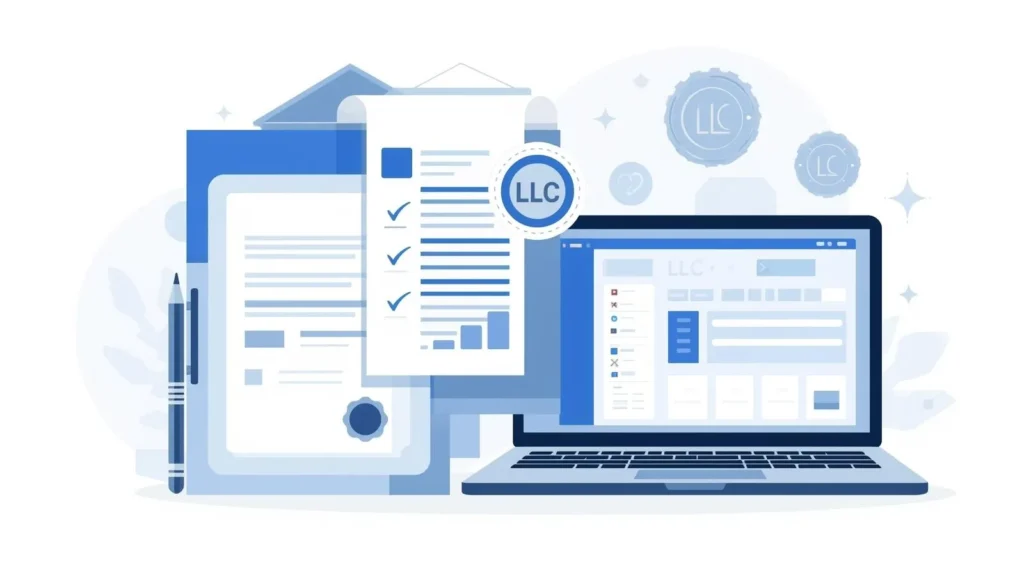
Remote LLC owners have a few options.
1. Traditional US Business Bank Account
Traditional banks include large banks with physical branches.
They may offer strong banking services, but remote approval is often difficult.
Best for:
• Owners who can visit the US
• Businesses needing branch services
• Companies with larger banking needs
Not ideal for:
• Non-US residents who cannot travel
• New remote LLCs with limited proof
• Founders without a US address
2. Online Business Banking Platform
Online platforms are often better for remote LLCs.
They usually allow online applications and may support foreign-owned LLCs.
Best for:
• Remote founders
• Digital businesses
• Startups
• Agencies
• Ecommerce stores
• SaaS companies
3. Fintech Business Account
Fintech accounts are not always traditional bank accounts, but they can be useful for receiving and sending money.
Some offer USD account details, cards, transfers, and payment features.
Best for:
• International founders
• Freelancers
• Online sellers
• Multi-currency businesses
Before choosing a fintech account, check whether it offers FDIC insurance through partner banks or uses another protection model.
4. Multi-Currency Business Account
A multi-currency account is useful if your LLC receives payments in different currencies.
This can help reduce conversion fees and simplify international payments.
Best for:
• Global ecommerce businesses
• Consultants with international clients
• SaaS companies
• Affiliate marketers
• Remote agencies
Common Reasons Remote LLC Bank Applications Get Rejected
Bank account rejection is common for remote LLC owners, especially when the application is incomplete.
Here are common reasons.
1. No EIN
Most providers expect your LLC to have an EIN.
If you apply without one, your application may be delayed or rejected.
2. Weak Business Explanation
If the provider cannot understand what your business does, they may reject the application.
Be specific. Instead of saying “online business,” say “digital marketing services for ecommerce brands” or “online retail store selling home accessories.”
3. Mismatched Documents
Your LLC name, owner name, business address, and EIN details should match across documents.
Mismatches create trust issues.
4. Unsupported Country
Some banking providers do not support applicants from certain countries.
This may be due to compliance, sanctions, risk rules, or internal policies.
5. High-Risk Business Activity
Some industries are harder to approve.
Examples may include:
• Crypto
• Gambling
• Adult content
• Weapons
• High-risk supplements
• Financial services
• Unregulated investment products
6. No Business Website or Proof
A basic website, invoice, contract, or product page can help prove that your business is real.
If your business has no online presence, approval may be harder.
How to Improve Your Approval Chances?
You can improve your chances by preparing properly before applying.
Use this checklist:
| Step | Why It Helps |
|---|---|
| Get EIN first | Shows your LLC is ready for banking |
| Create operating agreement | Proves ownership and authority |
| Use consistent addresses | Reduces verification issues |
| Build a basic website | Helps verify business activity |
| Prepare invoices or contracts | Shows real business purpose |
| Use clear ID documents | Avoids identity verification delays |
| Choose the right provider | Improves approval likelihood |
| Explain your business clearly | Helps compliance review |
Your application should look clean, consistent, and easy to verify.
US Business Bank Account vs Payment Processor
A bank account and payment processor are not the same.
| Feature | Business Bank Account | Payment Processor |
|---|---|---|
| Main purpose | Hold and manage business funds | Accept customer payments |
| Examples | Bank or fintech business account | Stripe, PayPal, Shopify Payments |
| Needed for LLC? | Strongly recommended | Depends on business model |
| Used for expenses | Yes | Limited |
| Used for tax records | Yes | Partly |
| Holds company funds | Yes | Temporarily |
Most LLCs need both.
Your payment processor collects customer payments. Your business bank account receives the payouts and helps manage the money.
How Much Does It Cost to Open a US Business Bank Account?

Costs depend on the provider.
Some online business accounts have no monthly fee. Others charge monthly fees, wire fees, card fees, foreign exchange fees, or minimum balance fees.
| Cost Type | Typical Range |
|---|---|
| Account opening fee | Often free, but varies |
| Monthly fee | $0 to $30 or more |
| Incoming ACH | Often free |
| Domestic wire | Free to $30 |
| International wire | $10 to $50 or more |
| Currency conversion | Varies |
| Debit card | Often free |
| Minimum deposit | $0 to several hundred dollars |
Always check the fee schedule before opening the account.
A “free” account may still charge for wires, currency exchange, or international transfers.
Can a Non-US Resident Open a US Business Bank Account?
Yes, many non-US residents can open a US business account for their LLC, especially through digital platforms.
However, approval depends on:
• Country of residence
• Business activity
• Documents provided
• EIN status
• Address verification
• Source of funds
• Provider policy
• Risk review
Some traditional banks may require a US visit. Online providers may be more flexible, but they still follow strict compliance rules.
A non-US resident should prepare all documents before applying.
Do You Need a US Address?
Most providers ask for some type of business address.
This does not always mean you need to live in the US.
However, a registered agent address may not be accepted as your business address.
You may need:
• Business office address
• Virtual office address
• Mailing address
• Commercial address
• Foreign residential address for owner verification
Each provider has its own rules.
Before applying, check whether your address type is accepted.
Do You Need an ITIN or SSN?
Many non-US residents do not have an SSN or ITIN.
Some providers may allow you to apply with a passport and EIN. Others may ask for an ITIN or additional verification.
You do not always need an ITIN to open a business bank account, but having one may help with certain banks.
The EIN is usually more important for the LLC itself.
Business Bank Account Checklist for Remote LLCs
Use this checklist before applying.
| Step | Task |
|---|---|
| 1 | Form your US LLC |
| 2 | Get your Articles of Organization |
| 3 | Apply for EIN |
| 4 | Create operating agreement |
| 5 | Prepare passport or ID |
| 6 | Prepare proof of address |
| 7 | Set up business website or proof |
| 8 | Choose a remote-friendly banking provider |
| 9 | Complete online application |
| 10 | Upload required documents |
| 11 | Answer compliance questions |
| 12 | Wait for approval |
| 13 | Fund the account |
| 14 | Connect payment processors |
| 15 | Start bookkeeping |
FAQs About Opening a US Business Bank Account for a Remote LLC
Can I open a US business bank account without visiting the US?
Yes, some online banking platforms and fintech providers allow remote applications. Traditional banks may still require an in-person visit.
Do I need an EIN to open a US business bank account?
In most cases, yes. An EIN is commonly required for LLC business banking.
Can I use my registered agent address for banking?
Some providers may reject registered agent addresses as business addresses. A separate business address or accepted mailing address may be needed.
Can a non-US resident open a US LLC bank account?
Yes, many non-US residents can apply, especially through online providers. Approval depends on documents, country, business type, and verification.
Do I need an SSN to open a US business bank account?
Not always. Some providers accept foreign owners with a passport and EIN. Others may ask for an ITIN or additional documents.
What if my application is rejected?
Review the reason, fix document mismatches, improve your business proof, and apply with another provider that supports your profile.
Can I open a bank account before getting an EIN?
Usually no. Most providers want your EIN before approving a business account.
Is a fintech account the same as a bank account?
Not always. Some fintech platforms partner with banks, while others are money service or electronic money providers. Always check how your funds are held and protected.
Final Thoughts
Opening a US business bank account for a remote LLC is possible, but it requires proper preparation.
You should form your LLC first, get your EIN, create an operating agreement, prepare identification documents, set up a reliable business address, and choose a provider that supports remote applications.
For many non-US residents and remote founders, online business banking platforms are easier than traditional banks.
They are usually more flexible, faster to apply with, and better suited for digital businesses.
Still, approval is never guaranteed. Banks and fintech providers need to verify who you are, what your business does, where the money comes from, and whether your company fits their risk rules.
The best way to improve your chances is to make your application clean and consistent.
Use the same LLC name everywhere, provide clear documents, explain your business properly, and keep your records organized.
A US business bank account is more than a place to store money. It helps your LLC operate like a real company.
It supports payments, taxes, bookkeeping, business verification, and long-term credibility.
For a remote LLC, it is one of the key steps that turns your registered company into a working business.