
Starting a new LLC is exciting, but forming the company is only one part of becoming legally ready to sell.
If your LLC sells taxable products or certain taxable services, you may need a seller’s permit before collecting sales tax from customers.
A seller’s permit is a state-issued authorization that allows your business to collect sales tax and send it to the state.
It may also be called a sales tax permit, sales tax license, sales and use tax permit, resale permit, or vendor’s license, depending on the state.
Many new LLC owners confuse a seller’s permit with a general business license. They are not the same.
A business license allows your company to operate in a city, county, or state. A seller’s permit allows your company to collect and remit sales tax.
If your LLC sells physical goods, retail products, online products, taxable digital goods, or certain taxable services, you should check whether a seller’s permit is required before making sales.
In this guide, you will learn how to get a seller’s permit for your new LLC, who needs one, what information is required, how much it may cost, and how to stay compliant after approval.
What Does a Seller’s Permit Mean for an LLC?
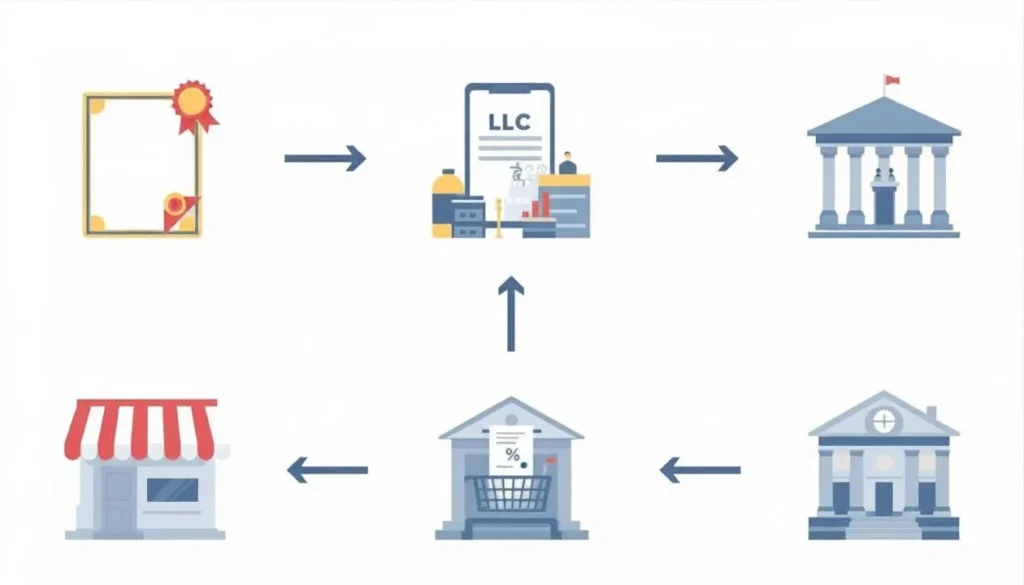
A seller’s permit is a state tax registration that allows your LLC to legally collect sales tax from customers.
When your LLC sells taxable goods or services, you may need to charge sales tax at checkout.
That money does not belong to your business. You collect it from the customer and later send it to the state.
A seller’s permit gives your LLC permission to do that.
A seller’s permit may be required for:
• Retail stores
• Ecommerce businesses
• Amazon sellers
• Shopify stores
• Wholesale businesses
• Product-based LLCs
• Handmade product sellers
• Dropshipping businesses
• Some digital product sellers
• Some service businesses, depending on the state
For example, if your LLC sells clothing, furniture, electronics, beauty products, supplements, home goods, or handmade items, you may need a seller’s permit in the state where your business has sales tax obligations.
Seller’s Permit vs Business License
A seller’s permit and a business license are different.
Many LLC owners need both.
| Item | Seller’s Permit | Business License |
|---|---|---|
| Main Purpose | Allows collection of sales tax | Allows business operation in a location |
| Issued By | State tax agency | City, county, or state agency |
| Needed For | Selling taxable goods or services | Operating certain businesses |
| Tax Related | Yes | Not always |
| Also Called | Sales tax permit or sales tax license | Business tax license or local license |
For example, a boutique may need a city business license to operate and a seller’s permit to collect sales tax on retail sales.
If your LLC only provides non-taxable services, you may not need a seller’s permit, but you may still need a local business license.
Who Needs a Seller’s Permit?
Your LLC may need a seller’s permit if it sells taxable products or services in a state where it has sales tax nexus.
Sales tax nexus means your business has enough connection with a state that the state can require you to collect sales tax.
Common nexus triggers include:
• Physical office in the state
• Store, warehouse, or inventory location
• Employees or contractors in the state
• Selling at trade shows or events
• Owning property in the state
• Reaching economic sales thresholds
• Storing inventory with a marketplace or fulfillment center
A physical store usually creates nexus in that state.
Online sellers can also create nexus through economic activity. If your LLC sells enough into a state, it may need to register even without a physical location there.
This is especially important for ecommerce sellers, Amazon FBA sellers, dropshippers, and multi-state businesses.
Do Online LLCs Need a Seller’s Permit?
Yes, many online LLCs need a seller’s permit.
If you sell taxable products online, you may need a permit in your home state and possibly in other states where you meet sales tax nexus rules.
Online businesses that may need a seller’s permit include:
• Shopify stores
• Amazon sellers
• Etsy sellers
• eBay sellers
• Walmart Marketplace sellers
• Dropshipping stores
• Print-on-demand stores
• Digital product sellers, depending on state rules
However, marketplace facilitator rules can change the situation.
If you sell only through marketplaces like Amazon, Etsy, or Walmart, the marketplace may collect and remit sales tax on your behalf in many states. But this does not always mean you have zero registration duties.
Some states may still require registration depending on your activity, inventory, and sales volume.
How to Get a Seller’s Permit for Your LLC?

The seller’s permit process is handled at the state level. In most states, you can apply online through the state tax department.
Step 1: Form Your LLC First
Before applying for a seller’s permit, form your LLC with the state.
You usually need:
• LLC legal name
• State approval document
• Business address
• Registered agent details
• Ownership information
• EIN
Your seller’s permit application should match your LLC records.
If your LLC name is Blue Oak Retail LLC, use that exact name on the seller’s permit application.
Do not use a short version, brand name, or DBA unless the form asks for it.
Step 2: Get an EIN From the IRS
Most states ask for your EIN when you apply for a seller’s permit.
An EIN is your federal business tax ID.
You may need it to:
• Register for sales tax
• Open a business bank account
• File tax returns
• Hire employees
• Work with payment processors
If your LLC is new, get the EIN before applying for your seller’s permit.
Step 3: Confirm What You Sell Is Taxable
Not every product or service is taxed the same way.
Physical products are commonly taxable, but rules vary by state.
Taxable items may include:
• Clothing
• Electronics
• Furniture
• Beauty products
• Home goods
• Digital products in some states
• Prepared food in many states
• Software in some states
• Certain services in some states
Some products may be exempt or taxed differently, such as groceries, medicine, or certain business-to-business items.
Before applying, confirm whether your LLC sells taxable goods or services.
Step 4: Identify Where You Need a Permit
Do not apply randomly in every state.
You usually need a seller’s permit in states where your LLC has sales tax obligations.
Start with your home state or main business state.
Then review other states where you may have nexus.
You may need a permit if your LLC has:
• Office or store in the state
• Inventory stored in the state
• Employees in the state
• Regular sales events in the state
• High online sales into the state
• Marketplace inventory in the state
For a simple local LLC, this may only be one state.
For an ecommerce LLC, it may become multiple states over time.
Step 5: Find the Correct State Tax Agency
Seller’s permits are usually issued by the state tax agency, not the Secretary of State.
The agency may be called:
| Agency Name | Example |
|---|---|
| Department of Revenue | Common in many states |
| Department of Taxation | Used in some states |
| Comptroller | Used in Texas |
| Tax Commission | Used in some states |
| Department of Tax and Fee Administration | Used in California |
Search for your state’s official sales tax registration portal.
Be careful with third-party websites that charge extra fees to file something you may be able to do directly.
Step 6: Prepare Your Business Information
Before starting the application, collect all required details.
You may need:
| Information Needed | Why It Matters |
|---|---|
| LLC legal name | Must match state records |
| EIN | Identifies your business for tax purposes |
| Business address | Shows where the business operates |
| Mailing address | Used for state notices |
| Owner details | Identifies responsible parties |
| Business start date | Helps determine filing obligations |
| Products or services sold | Helps classify sales tax rules |
| NAICS code | Identifies your industry |
| Estimated monthly sales | Helps assign filing frequency |
| Bank details | Sometimes needed for tax payments |
Having this ready makes the application easier.
Step 7: Complete the Online Application
Most states allow online seller’s permit registration.
The application may ask:
• What does your LLC sell?
• When did you start selling?
• Where is your business located?
• Do you sell online, in person, or both?
• Do you have employees?
• Do you have inventory in the state?
• Do you sell through marketplaces?
• What is your expected sales volume?
Answer honestly and clearly.
If your LLC sells both taxable and non-taxable items, explain your business activity accurately.
Step 8: Submit the Application and Save Confirmation
After completing the application, submit it through the state portal.
Some states issue the permit immediately. Others take several days or longer to review.
After submission, save:
• Confirmation number
• Permit number
• Filing receipt
• Login details for the tax portal
• Copy of the permit
• Any state messages
Keep these records in your LLC compliance folder.
Step 9: Set Up Sales Tax Collection
Once your seller’s permit is active, set up sales tax collection correctly.
If you sell online, configure sales tax in your ecommerce platform.
This may include:
• Tax rates
• Shipping tax rules
• Product tax categories
• Marketplace settings
• State-specific exemptions
• Local tax rates
If you sell in person, make sure your POS system charges the correct sales tax.
Do not collect sales tax before you are properly registered if your state does not allow it.
Step 10: File Sales Tax Returns on Time
Getting the permit is only the beginning.
Once registered, your LLC must file sales tax returns based on the schedule assigned by the state.
Your filing schedule may be:
• Monthly
• Quarterly
• Semiannually
• Annually
Some states require you to file even if you had zero sales during the period.
This is called a zero return.
Do not ignore filing just because your LLC had no sales.
How Much Does a Seller’s Permit Cost?
The cost depends on the state.
Many states do not charge a fee for a basic sales tax permit. Some states charge a small registration fee. Others may require a security deposit depending on business type or risk.
| Cost Item | Typical Range |
|---|---|
| Seller’s permit application | Free to low state fee |
| Security deposit | Varies by state and business |
| Renewal fee | Some states charge, others do not |
| Sales tax software | Optional |
| Professional filing help | Optional |
Even if the permit is free, compliance is not optional. You must collect, file, and remit sales tax correctly.
Seller’s Permit vs Resale Certificate
A seller’s permit and a resale certificate are related, but different.
| Item | Seller’s Permit | Resale Certificate |
|---|---|---|
| Purpose | Allows you to collect sales tax | Allows tax-free purchases for resale |
| Issued By | State tax agency | Often completed by buyer using permit details |
| Used For | Selling taxable goods or services | Buying inventory without paying sales tax upfront |
| Needed First? | Usually yes | Often uses seller’s permit number |
For example, if your LLC buys wholesale products to resell, your seller’s permit may allow you to provide a resale certificate to suppliers.
This lets you buy inventory tax-free because the final customer pays sales tax when the product is sold.
Do not use a resale certificate for items you plan to use personally or for business supplies that are not for resale.
Common Mistakes to Avoid
1. Selling Before Registering
If your LLC is required to collect sales tax, register before making taxable sales.
Late registration can create back taxes, penalties, and interest.
2. Applying in the Wrong State
Register where you have sales tax obligations, not randomly in every state.
Start with your home state and states where you have nexus.
3. Confusing Seller’s Permit With Business License
A seller’s permit handles sales tax. A business license gives permission to operate.
You may need both.
4. Not Filing Zero Returns
Some states require returns even when you made no sales.
Missing zero returns can still create penalties.
5. Collecting the Wrong Tax Rate
Sales tax rates can include state, county, city, and local district taxes.
Use accurate tax settings or sales tax software if you sell in multiple locations.
6. Forgetting Marketplace Rules
Marketplace sales may be handled differently from direct website sales.
Know whether the marketplace collects tax for you and whether you still need to register.
Seller’s Permit Checklist for New LLCs
| Checklist Item | What to Do | Why It Matters |
|---|---|---|
| Confirm your LLC is formed | File your LLC and get state approval first. | Your permit application should match your official LLC records. |
| Get your EIN | Apply for a federal Tax ID before registering for sales tax. | Most states ask for your EIN during tax registration. |
| Review taxable sales | Check whether your products or services are taxable in your state. | Not every sale is taxed the same way. |
| Identify nexus states | Review where your LLC has physical or economic sales tax obligations. | You only need permits where your business is required to collect sales tax. |
| Find the official tax portal | Use your state revenue department or tax agency website. | This helps avoid unnecessary third-party fees. |
| Gather business details | Prepare LLC name, EIN, address, owner details, start date, and sales information. | Accurate information reduces delays and rejected applications. |
| Submit the application | Complete the state sales tax registration form online or by mail if needed. | This gives your LLC legal authority to collect sales tax. |
| Save permit records | Download the permit, confirmation number, and tax portal login details. | You will need these for filings, renewals, and resale certificates. |
| Set up tax collection | Configure your ecommerce platform, POS system, or invoices. | Collecting the correct tax prevents underpayment issues. |
| Track filing deadlines | Add monthly, quarterly, or annual sales tax due dates to your calendar. | Missing returns can lead to penalties even if no tax is due. |
Do You Need a Professional to Get a Seller’s Permit?
You can usually apply for a seller’s permit yourself if your LLC is simple and sells in one state.
Professional help may be useful if:
• You sell in multiple states
• You use Amazon FBA or marketplace fulfillment
• You sell taxable and exempt products
• You have inventory in multiple states
• You are unsure about economic nexus
• You sell digital products or software
• You have past unregistered sales
• You need resale certificates for suppliers
For simple local businesses, the process is usually manageable without an attorney.
For ecommerce businesses selling across state lines, sales tax advice can save you from expensive mistakes.
FAQs About Getting a Seller’s Permit for an LLC
Does every LLC need a seller’s permit?
No. Your LLC usually needs one only if it sells taxable products or services in a state where it has sales tax obligations.
Is a seller’s permit the same as a sales tax permit?
Yes, in many states. The name may vary, but both usually refer to permission to collect and remit sales tax.
Do I need a seller’s permit for online sales?
Often yes, especially if you have nexus in a state. Ecommerce sellers should review both home-state and multi-state sales tax rules.
Can I get a seller’s permit before forming my LLC?
It is better to form the LLC first so the permit matches your legal business name and EIN.
How long does it take to get a seller’s permit?
Some states issue it immediately online. Others may take several days or longer.
Do I need a seller’s permit if I sell only on Amazon or Etsy?
Maybe. Marketplaces often collect sales tax for sellers, but you may still have registration duties depending on your state, inventory, and business activity.
Can I use my seller’s permit to buy inventory tax-free?
Often yes, through a resale certificate. You should only use it for items you plan to resell.
What happens if I collect sales tax without a permit?
That can create compliance problems. Register before collecting tax if your state requires it.
Do seller’s permits expire?
Some states require renewal. Others keep the permit active as long as the business remains compliant.
Do I need multiple seller’s permits?
You may need permits in multiple states if your LLC has nexus in those states.
Final Thoughts
Getting a seller’s permit is one of the most important tax steps for a new LLC that sells taxable products or services.
The process is usually simple. Form your LLC, get your EIN, confirm what you sell is taxable, identify where you have sales tax obligations, apply through the state tax agency, save your permit details, and start filing sales tax returns on time.
The permit itself is only the beginning.
Once your LLC is registered, you must collect the correct sales tax, file returns by the assigned deadline, and remit the tax you collected from customers.
For a local store, this may be simple. For an ecommerce LLC selling across multiple states, it can become more complex because of nexus rules, marketplace facilitator laws, and different state filing schedules.
The safest approach is to register before collecting tax, keep clean records, track deadlines, and review your sales tax obligations as your business grows.
A seller’s permit helps your LLC operate legally, sell with confidence, and avoid tax problems that can become expensive later.