
Choosing a business name sounds simple until you realize one thing: a good name is not just about branding.
It also needs to be legally compliant.
Your business name should be unique enough to register, clear enough to avoid misleading customers, and safe enough to reduce trademark problems.
If you choose the wrong name, your state may reject your LLC or corporation filing. Worse, another company may claim trademark rights and force you to rebrand later.
That can be expensive.
You may lose your domain, logo, packaging, ads, social profiles, and brand reputation. This is why business naming should not be rushed.
A legally compliant business name should meet state naming rules, avoid restricted words, respect trademark rights, match your business structure, and work across domains, DBAs, and branding assets.
In this guide, you will learn how to choose a business name that is legally compliant, how to check availability, what mistakes to avoid, and when to consider trademark protection.
What Does Legal Business Name Mean?

A legal business name is the official name your business uses on state records, tax documents, bank accounts, licenses, and contracts.
If you form an LLC, your legal name is the name approved by the state when you file Articles of Organization.
For example:
| Business Structure | Legal Name Example |
|---|---|
| LLC | BrightPath Marketing LLC |
| Corporation | BrightPath Marketing Inc. |
| Sole proprietor | Owner’s personal legal name, unless using a DBA |
| Partnership | Legal names of partners, unless using a DBA |
Your legal business name is different from a brand name, domain name, or DBA.
For example, your LLC legal name may be:
BrightPath Media LLC
But your website or brand may operate as:
BrightPath
If you use a different public-facing name from your legal name, you may need a DBA, also called a trade name, assumed name, or fictitious name.
Why Legal Compliance Matters When Choosing a Business Name?
Your business name affects more than your logo.
It affects your state filing, trademark risk, tax records, bank account, contracts, licenses, and customer trust.
A legally weak name can create problems such as:
• State filing rejection
• Trademark disputes
• Forced rebranding
• Domain conflicts
• Banking verification issues
• Customer confusion
• Problems with licenses or permits
• Delayed business launch
For example, if you try to form an LLC named Northwest Bank Solutions LLC without being a licensed financial institution, your state may reject the name because it contains a restricted financial term.
If you choose a name too similar to an existing trademark, the state may approve your LLC, but you could still face trademark trouble later.
State approval does not mean trademark protection. These are separate checks.
How to Choose a Business Name the Right Way?

Choosing a legally safe business name is a process. Do not start with only a domain search or logo idea.
Follow these steps before filing your business.
Step 1: Choose the Right Business Structure First
Before choosing the final name, decide your business structure.
Your structure affects the required name ending.
For example, an LLC usually needs an LLC designator such as:
• LLC
• L.L.C.
• Limited Liability Company
A corporation may need:
• Inc.
• Corporation
• Corp.
• Incorporated
Do not use the wrong entity ending.
For example, an LLC should not use “Inc.” or “Corporation” in its legal name because that suggests a different business structure.
If your company is an LLC, a compliant name would be:
Blue Oak Consulting LLC
Not:
Blue Oak Consulting Inc.
Step 2: Follow Your State’s Naming Rules
Each state has its own business naming rules.
Most states require that your business name be distinguishable from other registered names in that state.
This means your name cannot be identical or too similar to another active business entity on state records.
Common state rules include:
• Name must be unique or distinguishable
• Name must include the correct entity ending
• Name cannot mislead the public
• Name cannot suggest a government connection
• Name cannot use restricted words without approval
• Name cannot imply illegal business activity
For example, your state may reject a name that sounds like a government agency, bank, insurance company, university, or licensed professional firm unless you have proper approval.
Always check your state’s Secretary of State or business registry rules before filing.
Step 3: Avoid Restricted and Prohibited Words
Many states restrict certain words in business names.
These words may require extra approval, licenses, or documentation.
Common restricted words include:
| Restricted Word Type | Examples |
|---|---|
| Financial terms | Bank, trust, credit union, lender |
| Insurance terms | Insurance, insurer, assurance |
| Professional terms | Attorney, law, medical, engineer |
| Government terms | Federal, Treasury, State Department, FBI |
| Education terms | University, college, academy |
| Regulated industries | Pharmacy, mortgage, investment |
For example, if you want to use the word “Bank” in your name, you may need approval from banking regulators.
If you use “Attorney” or “Law,” you may need to be properly licensed.
If your business is not licensed for that industry, avoid these words.
A safer name is usually broader and neutral.
Step 4: Search Your State Business Name Database
After creating a shortlist, search your state’s business name database.
This is usually available through the Secretary of State website.
Search for:
• Exact name matches
• Similar spellings
• Singular and plural versions
• Abbreviations
• Names with and without punctuation
• Similar-sounding names
For example, if you want:
PrimeWave Digital LLC
Also search:
• Prime Wave Digital
• PrimeWave Media
• Prime Wave Marketing
• PrimeWave Solutions
• Primewave LLC
Your goal is to avoid names that may be too close to existing businesses.
If a similar name already exists, choose something more distinct.
Step 5: Check Trademark Availability
This step is very important.
A state may approve your business name even if another company owns federal trademark rights.
That means state name availability does not guarantee legal safety.
A trademark protects brand names, logos, slogans, and other identifiers used in commerce. The USPTO handles federal trademark registration in the United States.
Before using a name, search:
• USPTO trademark database
• Google search results
• Social media platforms
• Domain records
• Industry directories
• Marketplace listings
• App stores, if relevant
You are not only looking for exact matches. You should also look for names that sound similar, look similar, or create confusion in the same industry.
For example, if there is already a software company named CloudNest, starting another software company called KlowdNest could still create confusion.
If your brand will be public, national, or used in ads, trademark review becomes even more important.
Step 6: Check Domain Name Availability
Your business name should also work online.
Check whether a matching or close domain is available.
A domain does not need to be identical, but it should be easy to remember and related to your brand.
For example:
| Business Name | Good Domain Options |
|---|---|
| BrightPath Media LLC | brightpathmedia.com |
| Northline Consulting LLC | northlineconsulting.com |
| Blue Oak Digital LLC | blueoakdigital.com |
Avoid names where all good domain options are already taken.
Also be careful with domain names that include someone else’s trademark.
Just because a domain is available does not mean it is legally safe to use.
Step 7: Check Social Media Handles
Social media availability matters for branding.
Check major platforms such as:
• Facebook
• Instagram
• LinkedIn
• X
• TikTok
• YouTube
• Pinterest
Try to keep your handle consistent across platforms.
For example:
@brightpathmedia
is stronger than using different names everywhere.
If your chosen name is already heavily used by another business on social media, it may create confusion even if the state name is available.
Step 8: Make Sure the Name Is Not Misleading
A legally compliant name should not mislead the public.
Do not choose a name that suggests your business provides services it does not provide.
For example, avoid:
• Using “Legal” if you are not a law firm
• Using “Bank” if you are not a bank
• Using “University” if you are not an approved educational institution
• Using “Insurance” if you are not licensed in insurance
• Using “Government” terms that suggest official authority
Your name should match your actual business activity.
A clear and honest name is safer than a name that sounds bigger or more regulated than your business really is.
Step 9: Consider Future Growth
A legally compliant name should also make business sense long term.
Avoid names that are too narrow unless you are sure your business will stay in that niche.
For example:
Austin Logo Design LLC
may work today, but it can feel limiting if you later offer SEO, web design, paid ads, and branding services nationwide.
A broader name like:
Austin Creative Studio LLC
or
NorthPeak Digital LLC
gives more room to grow.
Choose a name that can support future services, locations, and product lines.
Step 10: Reserve or Register the Name
If your name is available but you are not ready to form the business, some states allow you to reserve the name for a limited time.
Name reservation can help protect the name while you prepare your LLC or corporation filing.
If you are ready to launch, you can register the name by filing your business formation documents.
For an LLC, this usually means filing Articles of Organization.
For a corporation, it usually means filing Articles of Incorporation.
Once approved, your legal business name becomes registered with the state.
Business Name vs DBA vs Trademark
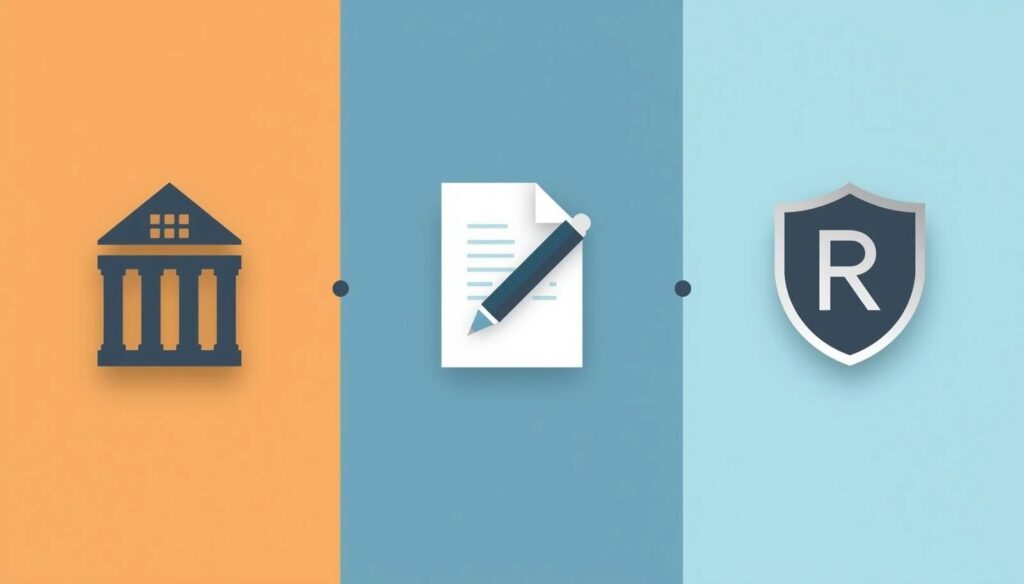
Many new business owners confuse these three.
They are not the same.
| Term | Meaning | Main Purpose |
|---|---|---|
| Legal business name | Official name registered with the state | Identifies your business entity |
| DBA | Public name used if different from legal name | Lets you operate under another name |
| Trademark | Brand protection for names, logos, or slogans | Helps protect brand identity |
For example:
| Type | Example |
|---|---|
| Legal business name | Blue Oak Media LLC |
| DBA | Blue Oak Studio |
| Trademark | Blue Oak brand name or logo |
A DBA does not create a separate business entity. It also does not automatically protect your brand. The SBA notes that registering a DBA does not provide legal protection by itself, though many states require DBA registration when using one.
If you want stronger brand protection, consider trademark registration.
Good Business Name Examples
Here are examples of business names that are usually cleaner from a legal and branding perspective:
| Business Type | Better Name Style |
|---|---|
| Marketing agency | Blue Oak Digital LLC |
| Real estate company | Northline Property Group LLC |
| Consulting business | ClearPath Advisors LLC |
| Ecommerce brand | Meadow & Stone LLC |
| Software company | CloudFrame Labs LLC |
| Local service business | GreenPeak Services LLC |
These names are simple, neutral, and flexible.
They do not suggest restricted industries unless the business actually operates in that field.
Bad Business Name Examples to Avoid
Some names create legal or branding problems.
| Bad Name Type | Example | Problem |
|---|---|---|
| Restricted word | Prime National Bank LLC | May require banking approval |
| Wrong entity ending | BrightPath Consulting Inc. for an LLC | Misstates business structure |
| Government-like name | Federal Business Registry LLC | May mislead customers |
| Too similar | Amazan Retail LLC | Could create trademark confusion |
| Too narrow | Miami Logo Design LLC | Limits future expansion |
| Personal address style | 123 Main Street Holdings LLC | Weak privacy and branding |
A good business name should be compliant, original, and practical.
Legal Business Name Checklist
| Checklist Item | What to Do | Why It Matters |
|---|---|---|
| Choose your structure first | Decide whether you are forming an LLC, corporation, sole proprietorship, or partnership. | Your structure affects the required legal name ending. |
| Add the correct designator | Use LLC, L.L.C., Inc., Corp., or another approved ending based on your entity type. | States may reject names with missing or incorrect endings. |
| Search state records | Check your Secretary of State business name database. | Your name must usually be distinguishable from existing state entities. |
| Avoid restricted words | Watch for terms like bank, insurance, attorney, university, or government-related words. | Restricted words may require licenses, approval, or extra review. |
| Search trademarks | Check the USPTO database and common law usage online. | State approval does not protect you from trademark disputes. |
| Check domain availability | Look for a clean matching or close domain name. | Your business name should work online and support branding. |
| Check social handles | Search major social media platforms. | Consistent handles help avoid confusion and strengthen brand identity. |
| Avoid misleading language | Make sure your name reflects what your business actually does. | Misleading names may be rejected or create legal risk. |
| Think long term | Choose a name that can grow with your services and market. | A narrow name can force rebranding later. |
| Reserve or register the name | Reserve the name if needed or file formation documents when ready. | This locks in your name with the state once approved. |
Common Mistakes to Avoid When Choosing a Business Name

1. Only Checking the Domain
A domain search is not enough.
A name can be available as a domain but unavailable as a legal business name or risky from a trademark point of view.
2. Ignoring Trademark Risk
This is one of the biggest mistakes.
You may form your LLC successfully and still receive a trademark complaint later.
Always check trademarks before investing in branding.
3. Using Restricted Words Without Approval
Words like bank, insurance, attorney, medical, university, and federal can trigger extra rules.
Avoid them unless you are properly licensed and approved.
4. Choosing a Name Too Similar to a Competitor
Even if the name is not identical, it may still cause confusion.
Choose a name that clearly stands apart.
5. Making the Name Too Narrow
A location-based or service-specific name can limit future growth.
Choose something flexible if you plan to expand.
6. Forgetting DBA Requirements
If you operate under a name different from your legal business name, you may need to register a DBA.
Do not assume you can use any brand name publicly without checking local rules.
Do You Need a Lawyer to Choose a Business Name?
You do not always need a lawyer to choose a business name.
For a simple local LLC, you can often do the basic checks yourself.
However, legal help may be useful if:
• You plan to build a national brand
• You want to file a trademark
• Your name is close to another company’s name
• You operate in a regulated industry
• You use words like bank, legal, medical, insurance, or financial
• You are investing heavily in ads, packaging, or branding
• You plan to franchise or license the brand
A trademark attorney can help you avoid expensive naming problems before they happen.
FAQs About Choosing a Legally Compliant Business Name
Can I use any business name if the domain is available?
No. Domain availability does not mean the name is legally available. You still need to check state records and trademark conflicts.
Does registering an LLC protect my business name?
It protects the name at the state entity level, but it does not automatically give national trademark protection.
What is a DBA?
A DBA is a name your business uses publicly when it is different from the legal business name.
Do I need a trademark for my business name?
Not always, but it is worth considering if you plan to build a brand, sell nationally, advertise heavily, or protect your name from competitors.
Can two businesses have the same name?
Sometimes, yes, especially if they are in different states or industries. But trademark law may still create problems if customers could be confused.
Can I change my business name later?
Yes, but it usually requires filing an amendment with the state and updating bank accounts, tax records, licenses, contracts, domains, and branding.
Should my LLC name match my website name?
It does not have to match exactly, but keeping them close helps with branding and trust.
Final Thoughts
Choosing a business name is one of the first real decisions you make as a founder.
A strong name should be memorable, professional, flexible, and legally compliant.
Before you file your LLC or corporation, check your state naming rules, avoid restricted words, search the state database, review trademark risks, check domain availability, and confirm social handles.
Do not rely on only one search.
A name can pass the state check but still create trademark problems. A domain can be available but still violate another company’s brand rights.
A DBA can let you operate under a public name, but it does not automatically protect that name.
The safest approach is to choose a name that is distinct, honest, flexible, and easy to verify.
A legally compliant business name gives your company a cleaner start, reduces rebranding risk, and helps you build a brand that can grow without unnecessary legal headaches.