
Buying real estate through an LLC is a common strategy for investors seeking more privacy, clearer ownership records, and better separation between personal assets and investment property risks.
When you buy property in your personal name, your name may appear in county property records.
Anyone searching the public record may be able to find your ownership details, mailing address, purchase history, and sometimes even loan-related information.
An LLC can help reduce that public exposure.
Instead of your personal name appearing as the property owner, the LLC appears on the deed.
This can give you a layer of privacy, especially if the LLC is formed in a privacy-friendly state or managed through a registered agent.
However, using an LLC to buy real estate anonymously does not mean hiding from the law, avoiding taxes, misleading lenders, or escaping legal responsibilities.
Banks, title companies, tax agencies, courts, and certain government reporting systems may still require ownership information.
In 2026, privacy planning for real estate investors also needs to consider FinCEN rules.
While U.S.-formed companies are currently exempt from the Corporate Transparency Act’s BOI reporting requirement, FinCEN’s real estate reporting rules may still require beneficial ownership details for certain non-financed residential real estate transfers involving entities or trusts.
FinCEN removed BOI reporting requirements for U.S. companies and U.S. persons in 2025, but separate real estate transaction reporting rules can still apply in covered transactions. (FinCEN.gov)
So, the real goal is not perfect invisibility. The goal is lawful privacy.
In this guide, you will learn how to use an LLC to buy real estate anonymously, how the structure works, what steps to follow, which mistakes to avoid, and when you should speak with a professional.
What Anonymous Real Estate Ownership Really Means?
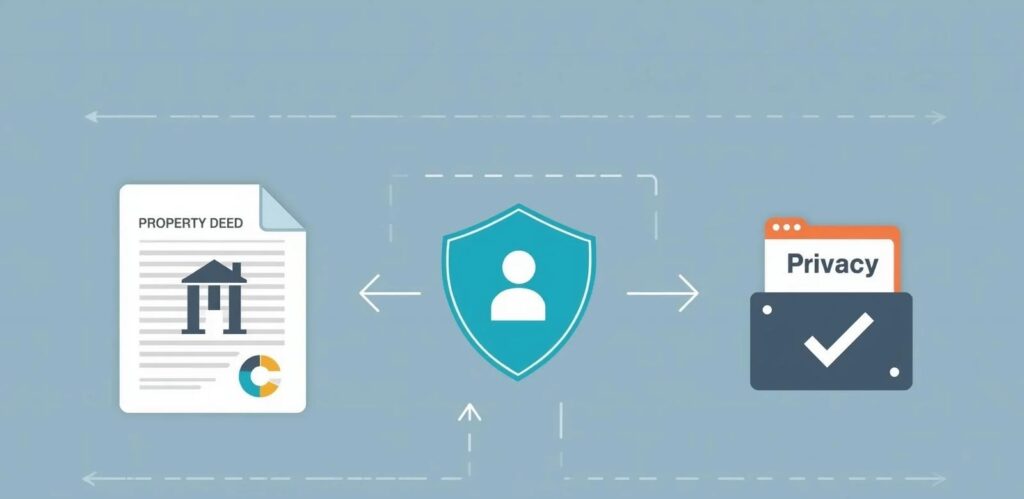
Anonymous real estate ownership usually means keeping your personal name off public property records.
In a normal real estate purchase, the deed may show your personal name as the buyer. This means your ownership can often be found through a county recorder, property appraiser, tax assessor, or public land records search.
When an LLC buys the property, the deed usually shows the LLC as the owner instead of you personally.
For example, instead of the deed showing:
John Smith
It may show:
Blue Ridge Holdings LLC
This can make it harder for the general public, tenants, competitors, marketers, and casual searchers to connect you personally to the property.
However, anonymous does not mean completely secret.
Your identity may still be disclosed to:
• Banks and lenders
• Title companies
• Tax professionals
• Attorneys
• Courts
• IRS or state tax agencies
• FinCEN reporting parties, if a covered transaction applies
• Registered agent or formation provider
• Insurance companies
• Property managers
The LLC helps with public-facing privacy, not illegal secrecy.
Why Real Estate Investors Use LLCs for Privacy?
Real estate investors use LLCs for several reasons. Privacy is one of the biggest, but it is not the only reason.
1. Keeping Personal Name Off Public Records
If the LLC is listed as the property owner, your personal name may not appear directly on the deed.
This can reduce unwanted attention from tenants, sellers, competitors, marketers, and curious people searching public records.
2. Separating Personal and Property Risk
Real estate comes with risk.
A tenant may sue. A visitor may get injured. A contractor may file a claim. A lease dispute may turn into legal trouble.
An LLC can help separate property-related liability from your personal assets when structured and managed properly.
3. Cleaner Asset Organization
If you own multiple rental properties, LLCs can help organize them.
Some investors use one LLC for each property. Others group several properties in one LLC.
The best structure depends on risk, cost, financing, insurance, and state rules.
4. Professional Ownership Structure
An LLC can make your real estate activity look more professional.
It can help with contracts, leases, vendor agreements, property management, and accounting.
5. Estate and Partnership Planning
If several investors are buying property together, an LLC can clearly define ownership percentages, voting rules, profit distribution, and exit terms through an operating agreement.
Can an LLC Make Real Estate Ownership Completely Anonymous?
No, not completely.
An LLC can help keep your name off public property records, but it does not erase your identity from every system.
Real estate transactions involve many parties. Depending on the transaction, you may need to disclose ownership information to lenders, title companies, closing agents, government agencies, insurance providers, or tax authorities.
Also, privacy varies by state.
Some states require more owner or manager information on LLC filings. Other states allow more privacy by letting you use a registered agent or organizer without listing members publicly.
States often associated with stronger LLC privacy include:
| State | Privacy Feature |
|---|---|
| Wyoming | Strong privacy-friendly LLC structure |
| New Mexico | Does not require annual reports and can offer good owner privacy |
| Delaware | Does not publicly list members in standard LLC filings |
| Nevada | Often used for privacy and business flexibility |
This does not mean these states are always best for real estate.
If the property is located in another state, you may still need to register the LLC as a foreign LLC in the property state. That can create extra costs and may reduce privacy depending on that state’s filing rules.
Step-by-Step Guide to Buying Property Privately With an LLC
Using an LLC for real estate privacy requires planning before closing. If you buy the property in your personal name first and transfer it later, you may create tax, loan, title, or due-on-sale issues.
Here is the clean step-by-step process.
Step 1: Choose the Right LLC State
The first step is choosing where to form the LLC.
You have two common options:
• Form the LLC in the state where the property is located
• Form the LLC in a privacy-friendly state and register it in the property state if required
For many small investors, forming the LLC in the same state as the property is simplest.
For example, if you are buying a rental property in Florida, forming a Florida LLC may be easier than forming a Wyoming LLC and then registering it as a foreign LLC in Florida.
However, if privacy is a major goal, some investors consider a privacy-friendly state such as Wyoming or New Mexico.
Here is a simple comparison:
| LLC Formation Option | Best For | Main Drawback |
|---|---|---|
| Property-state LLC | Simple setup and local compliance | May offer less privacy in some states |
| Privacy-state LLC | Better public-record privacy in some cases | May need foreign registration |
| Holding company structure | Investors with multiple properties | More cost and complexity |
| Land trust plus LLC | Stronger privacy in some states | Requires professional setup |
Before choosing the state, check filing rules, foreign LLC requirements, annual fees, and public disclosure rules.
Step 2: Pick a Neutral LLC Name
If privacy is your goal, do not use your personal name in the LLC name.
Avoid names like:
• John Smith Rentals LLC
• Patel Family Properties LLC
• Anikesh Real Estate Holdings LLC
Instead, choose a neutral name such as:
• Silver Oak Holdings LLC
• Northline Property Group LLC
• Clearstone Assets LLC
• Blue Ridge Property LLC
• Meadowview Holdings LLC
A neutral name makes it harder for public searchers to connect the LLC to you personally.
Also avoid using the property address in the LLC name if you want privacy.
Step 3: Use a Professional Registered Agent

A registered agent receives official legal mail for your LLC.
If you use yourself as the registered agent, your name or address may appear in public records.
For privacy, use a professional registered agent service.
A professional registered agent can help:
• Keep your home address off state records
• Receive legal notices
• Forward official mail
• Provide a stable address for state compliance
• Reduce personal exposure in public filings
Do not use a random friend or unreliable address. Your registered agent must be available during normal business hours and must handle important documents properly.
Step 4: Avoid Listing Yourself Publicly When Possible
Some states require member or manager information on public filings. Others do not.
If your state allows it, avoid listing your personal name as a member or manager in public documents.
Depending on the state and service provider, an organizer or formation company may be able to file the LLC without making your personal details public.
This is one reason investors often use professional formation services for privacy-focused LLCs.
However, never provide false information. The goal is to use lawful privacy options, not inaccurate filings.
Step 5: Create a Strong Operating Agreement
Your operating agreement is the internal rulebook for your real estate LLC.
It should explain:
• Who owns the LLC
• How the LLC is managed
• Who can sign closing documents
• How profits and losses are distributed
• How expenses are paid
• How new members are added
• What happens if a member leaves
• How the property can be sold
• How disputes are handled
For a single-member LLC, the operating agreement helps show that the LLC is separate from you personally.
For a multi-member real estate LLC, it is essential.
A real estate operating agreement should also address property-specific issues, such as repairs, reserves, refinancing, tenant decisions, property management, and capital calls.
Step 6: Get an EIN for the LLC
Your LLC should get an EIN from the IRS.
An EIN is the business tax ID for the LLC.
You may need it to:
• Open a business bank account
• File tax forms
• Set up bookkeeping
• Work with lenders
• Work with title companies
• Receive rental income
• Apply for insurance
• Hire property managers or contractors
Even if your LLC has only one owner, getting an EIN helps separate the LLC from your personal identity.
Step 7: Open a Business Bank Account

Open a separate bank account in the LLC’s name.
Do not use your personal bank account for rental income, repairs, mortgage payments, insurance, taxes, or property expenses.
A dedicated business account helps preserve the LLC’s separate legal status.
It also makes accounting easier.
Use the LLC bank account for:
• Rent deposits
• Security deposits, if allowed by state law
• Repairs and maintenance
• Mortgage payments
• Insurance premiums
• Property tax payments
• Contractor payments
• Property management fees
Mixing personal and business money is one of the fastest ways to weaken your LLC protection.
Step 8: Buy the Property Directly in the LLC’s Name
For the cleanest privacy setup, the LLC should buy the property directly.
The deed should list the LLC as the buyer.
For example:
Silver Oak Holdings LLC
Not:
John Smith
Buying directly in the LLC’s name helps keep your personal name off the deed from the beginning.
If you already own the property personally and want to transfer it into an LLC, be careful. A transfer may trigger:
• Due-on-sale issues with the mortgage
• Transfer taxes
• Reassessment of property taxes
• Title insurance problems
• Lender approval requirements
• Recording fees
Always review this with a real estate attorney or lender before transferring property.
Step 9: Use the LLC Name on Contracts and Leases

After the LLC owns the property, use the LLC name consistently.
Leases, vendor agreements, repair contracts, property management agreements, and insurance policies should use the LLC’s legal name.
For example:
Silver Oak Holdings LLC, by John Smith, Manager
This helps show that the LLC is the business owner and contracting party.
Do not sign only in your personal name.
Step 10: Keep Property Records Separate
Keep clean records for the property and the LLC.
Save copies of:
• Deed
• Closing statement
• Loan documents
• Insurance policies
• Lease agreements
• Rent records
• Repair invoices
• Contractor agreements
• Bank statements
• Tax filings
• Operating agreement
• LLC formation documents
If you own multiple properties, keep separate books for each property or each LLC.
Good records support liability protection and make tax filing much easier.
Should You Use One LLC or Multiple LLCs for Real Estate?
This depends on how many properties you own and how much risk each property carries.
| Structure | Best For | Main Drawback |
|---|---|---|
| One LLC for one property | Stronger liability separation | More cost and admin work |
| One LLC for multiple properties | Lower cost and simpler management | One lawsuit may affect all LLC assets |
| Series LLC | Some multi-property investors | Not available or recognized everywhere |
| Holding company plus property LLCs | Larger portfolios | More complex and expensive |
Many investors prefer one LLC per property because it separates risk.
For example, if one rental property has a lawsuit, the other properties may be better protected if they are owned by separate LLCs.
However, multiple LLCs mean more annual fees, registered agent costs, bank accounts, tax records, and admin work.
For a small investor with one property, one LLC may be enough.
Can You Get a Mortgage With an LLC?
Yes, but it can be harder than getting a personal mortgage.
Traditional residential lenders often prefer lending to individuals, not LLCs.
If the LLC is buying the property, you may need:
• Commercial loan
• DSCR loan
• Portfolio loan
• Private lender financing
• Hard money loan
• Cash purchase
Some lenders allow LLC ownership but require a personal guarantee from the owner.
If you personally guarantee the loan, you may still be personally responsible for the debt even though the LLC owns the property.
This is important.
An LLC can protect against some liability, but it does not protect you from obligations you personally guarantee.
Using a Land Trust With an LLC for More Privacy
In some states, investors use a land trust along with an LLC.
A land trust can hold title to the property, while the LLC may serve as the beneficiary of the trust.
This may create another layer of privacy because the trust name may appear on public property records instead of the LLC or individual owner.
A simple structure may look like this:
| Role | Example |
|---|---|
| Property title holder | 123 Main Street Land Trust |
| Beneficiary | Silver Oak Holdings LLC |
| LLC owner | Private individual |
This structure is not right for everyone.
Land trust rules vary by state. Lenders, title companies, and insurers may also have specific requirements.
Use an attorney if you are considering a land trust.
Privacy Limits You Need to Understand
An LLC can help with privacy, but it has limits.
Your ownership may still be visible or discoverable through:
• Loan documents
• Title company records
• Court orders
• IRS records
• State tax records
• Insurance applications
• Property management agreements
• FinCEN real estate reporting in covered transactions
• Lawsuit discovery
• Bank compliance checks
Also, all-cash or non-financed residential real estate purchases involving entities or trusts may trigger federal real estate reporting obligations in certain cases.
FinCEN’s real estate rule is separate from general LLC BOI reporting and focuses on specific real estate transfers involving legal entities and trusts.
This means you should not think of an LLC as total secrecy.
Think of it as public-record privacy and liability planning.
Tax Issues When Buying Real Estate With an LLC?
An LLC does not automatically reduce taxes.
By default, a single-member LLC is usually disregarded for federal tax purposes. A multi-member LLC is usually taxed as a partnership unless it elects another tax treatment.
The LLC may still need to report rental income, expenses, depreciation, gains, and losses.
Common tax issues include:
• Rental income reporting
• Depreciation
• Property tax deductions
• Mortgage interest deductions
• Passive activity rules
• Capital gains tax
• State income tax
• Local transfer taxes
• Franchise taxes in some states
If the LLC has foreign owners, tax reporting can become more complex.
Speak with a real estate tax professional before buying property through an LLC, especially if you are a non-US resident or buying across state lines.
Common Mistakes to Avoid
1. Buying Personally and Transferring Later Without Advice
This can trigger mortgage, tax, title, or insurance issues.
If privacy is the goal, plan before closing.
2. Using Your Personal Name in the LLC Name
A privacy LLC should not reveal your identity in its name.
Use a neutral business name.
3. Using Yourself as Registered Agent
If your name or home address appears in state records, privacy may be reduced.
Use a professional registered agent.
4. Mixing Personal and LLC Money
Do not pay property expenses from your personal account.
Use the LLC bank account.
5. Ignoring Insurance
An LLC does not replace insurance.
You still need landlord insurance, liability coverage, and possibly umbrella coverage.
6. Assuming the LLC Makes You Fully Anonymous
It does not.
Banks, courts, tax agencies, title companies, and certain reporting rules can still reveal ownership when legally required.
7. Forgetting Foreign LLC Registration
If your LLC is formed in one state but owns property in another, foreign registration may be required.
Check state rules before closing.
Final Thoughts
Using an LLC to buy real estate anonymously can be a smart privacy and asset protection strategy when done correctly.
The main benefit is that the LLC can appear on public property records instead of your personal name. This can reduce unwanted attention and make your ownership less visible to casual searchers.
But anonymity has limits.
Your identity may still be disclosed to banks, title companies, tax agencies, courts, insurance providers, and certain federal reporting systems. An LLC is not a tool for hiding illegal activity, avoiding taxes, or misleading lenders.
The right way to use an LLC is to plan before buying. Choose the right state, use a neutral LLC name, hire a professional registered agent, create an operating agreement, get an EIN, open a separate bank account, and buy the property directly in the LLC’s name.
Also, do not forget insurance, taxes, lender rules, and state compliance.
For real estate investors, an LLC can provide a cleaner ownership structure, better privacy, and stronger separation between personal and property-related risk.
Used properly, it can help you protect your identity in public records while keeping your investment business organized and compliant.