
Moving your LLC from one state to another can feel confusing, especially because every state has its own business filing rules.
Maybe you formed your LLC in Delaware but now operate from Florida. Maybe you started in California and want to move to Texas. Maybe you formed a Wyoming LLC for privacy but now your business activity is mostly in another state.
Whatever the reason, you may want your LLC’s legal home to match your new business location.
One of the cleanest ways to do that is through LLC domestication.
Domestication allows an LLC to move from one state to another while keeping the same legal identity. In many cases, your LLC can keep its existing EIN, business history, contracts, bank accounts, and ownership structure.
This is different from closing one LLC and starting a brand-new one. With domestication, the company continues, but its governing state changes.
However, domestication is not available everywhere. Both the original state and the new state must allow the process, or at least the new state must allow the LLC to become domesticated there under its rules.
In this guide, you will learn how LLC domestication works, when it makes sense, how to move your LLC from one state to another step by step, and what mistakes to avoid.
What Does It Mean to Domesticate an LLC?
LLC domestication is the legal process of changing the state where your LLC is formed.
In simple terms, your LLC moves its legal home from one state to another.
For example:
| Before Domestication | After Domestication |
|---|---|
| Blue Oak Media LLC is a Wyoming LLC | Blue Oak Media LLC becomes a Florida LLC |
| The LLC follows Wyoming LLC law | The LLC follows Florida LLC law |
| Wyoming is the formation state | Florida becomes the formation state |
The business does not usually start over. Instead, the same LLC continues under the laws of the new state.
This may help your company keep:
• Same EIN
• Same ownership structure
• Same business history
• Same contracts
• Same bank account, in many cases
• Same company name, if available
• Same tax identity, depending on structure
This is why domestication is often preferred over dissolving one LLC and forming another.
Why Move an LLC to Another State?
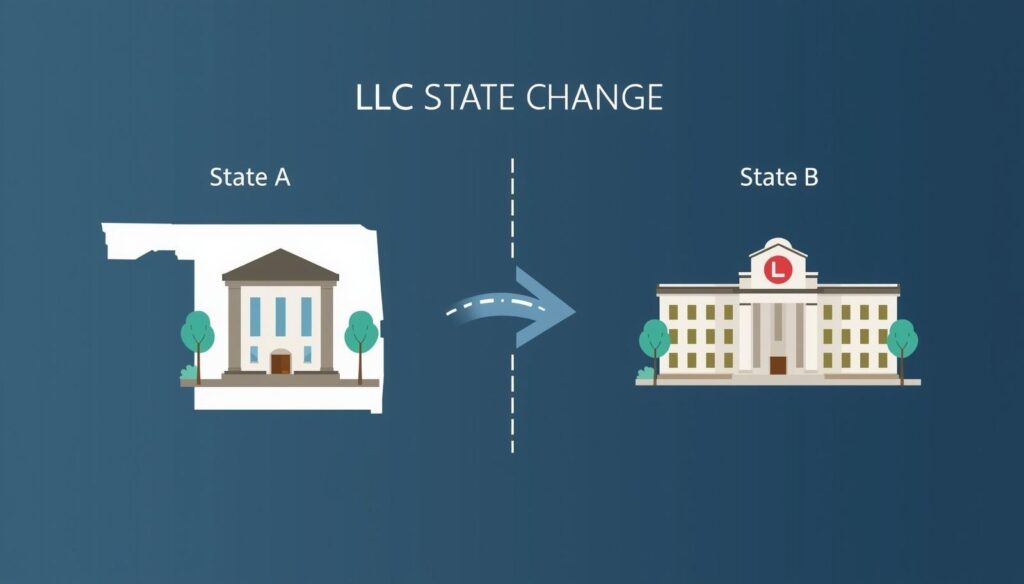
Business owners move LLCs for many reasons.
Sometimes the owner moves personally. Sometimes the business starts operating in a different state.
Sometimes the old state has high fees, strict rules, or unnecessary compliance requirements.
Common reasons include:
1. You Moved to a New State
If you formed your LLC in your old home state but now live and operate from a new state, domestication may simplify compliance.
Instead of maintaining the LLC in the old state and registering as a foreign LLC in the new state, you may move the LLC completely.
2. You Want Lower Fees
Some states have high annual fees, franchise taxes, publication rules, or reporting costs.
Moving to a lower-cost state may reduce yearly compliance expenses.
3. You Want Simpler Compliance
Maintaining an LLC in two states can mean two registered agents, two annual reports, and two sets of state rules.
Domestication may help you deal with only one main state.
4. You Want Better Business Laws
Some states are more business-friendly or offer stronger privacy, simpler filing systems, or better legal flexibility.
5. Your Business Operations Changed
If your LLC now has an office, employees, clients, or physical operations in a new state, it may make sense to move the LLC there.
Domestication vs Foreign Qualification vs Dissolution
Before moving your LLC, you should understand your options.
Domestication is not always the only path.
| Option | What It Means | Best For |
|---|---|---|
| Domestication | Move the LLC’s legal home to another state | Owners who want continuity |
| Foreign qualification | Keep old LLC and register in new state | Businesses operating in multiple states |
| Dissolution and new LLC | Close old LLC and form a new one | Simple businesses with no major contracts |
| Merger | Form new LLC and merge old LLC into it | Complex moves where domestication is unavailable |
Domestication is usually the cleanest option when available because the same company continues.
Foreign qualification may be better if you still operate in both states.
Dissolution and new formation may work for simple businesses but can create issues with EINs, contracts, bank accounts, licenses, and tax records.
Can Every LLC Domesticate to Another State?
No.
LLC domestication depends on state law.
Some states allow LLC domestication clearly. Some call it conversion instead of domestication.
Some allow inbound domestication but not outbound domestication. Some do not allow it at all.
Before starting, confirm:
• Does your current state allow the LLC to leave through domestication or conversion?
• Does your new state allow the LLC to domesticate into that state?
• Does your LLC need to be in good standing first?
• What forms are required?
• Are tax clearances required?
• Are member approvals required?
• Will the LLC name be available in the new state?
If either state does not support the process, you may need to use another method, such as merger or forming a new LLC.
How to Domesticate an LLC From One State to Another?
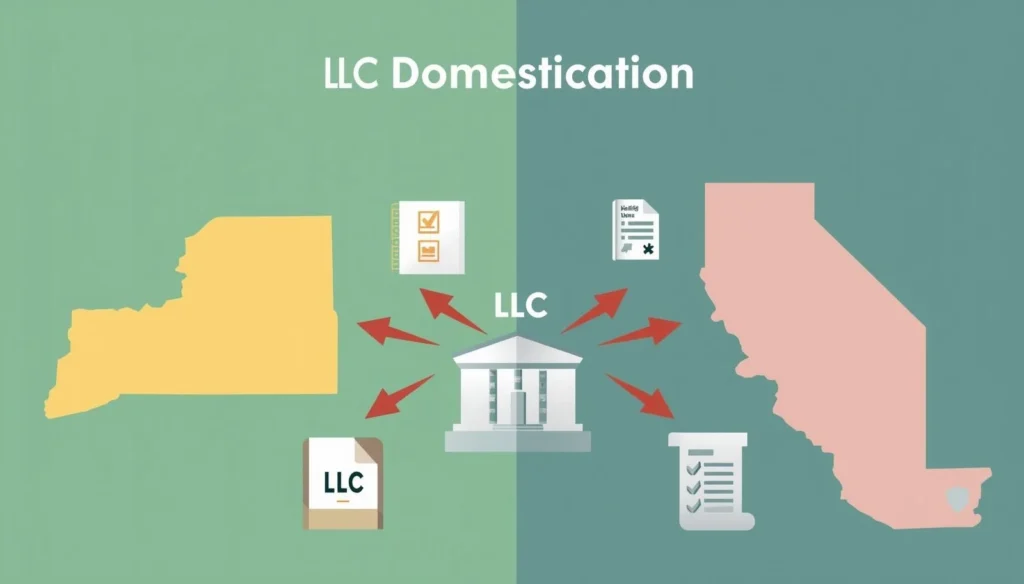
The exact process varies by state, but the general steps are similar.
Step 1: Confirm Both States Allow Domestication
Start by checking the rules in both states.
You need to know whether the old state allows the LLC to leave and whether the new state allows the LLC to become domesticated there.
Look for terms such as:
• Domestication
• Conversion
• Transfer of domicile
• Redomestication
• Articles of Domestication
• Certificate of Conversion
Some states use different names for the same general process.
If domestication is not available, do not force it. Use another method.
Step 2: Check Whether Your LLC Is in Good Standing
Most states require the LLC to be in good standing before domestication.
Good standing usually means:
• Annual reports are filed
• State fees are paid
• Franchise taxes are current
• Registered agent is active
• No major state compliance issues exist
If your LLC is delinquent, suspended, or administratively dissolved, you may need to fix those issues first.
This may require filing missed reports, paying fees, reinstating the LLC, or updating the registered agent.
Step 3: Check Name Availability in the New State
Your LLC name must usually be available in the new state.
For example, if your LLC is called Blue Oak Media LLC in Wyoming, you need to check whether that name is available in Florida before domestication.
If the name is already taken, you may need to:
• Use a different legal name
• Register under an alternate name
• File a DBA
• Modify the LLC name before or during domestication
Do not assume your name is available just because it exists in your old state.
Each state has its own business name database.
Step 4: Review Your Operating Agreement
Your operating agreement may explain how major company decisions are approved.
Moving the LLC to another state is a major decision.
Your agreement may require:
• Majority approval
• Supermajority approval
• Unanimous approval
• Manager approval
• Written member consent
For a single-member LLC, approval is usually simple.
For a multi-member LLC, document the decision properly.
Keep written approval with your company records.
Step 5: Prepare a Plan of Domestication
Some states require a formal plan of domestication.
Even if your state does not require it, creating one is a good idea.
A plan of domestication may include:
• Current LLC name
• Current formation state
• New state of domestication
• New LLC name, if changing
• Effective date
• Member approval details
• Statement that the LLC will continue in the new state
• Treatment of assets and liabilities
• Updated operating agreement terms
This document helps show that the move was approved and organized.
Step 6: Get a Certificate of Good Standing
Many states require a Certificate of Good Standing, also called a Certificate of Existence or Certificate of Status.
This document proves that your LLC is active and compliant in the old state.
You may need to submit it to the new state with the domestication filing.
Order it close to the filing date because some states require a recently issued certificate.
Step 7: File Domestication Documents With the New State
Next, file the required domestication documents with the new state.
These documents may be called:
• Articles of Domestication
• Certificate of Domestication
• Articles of Conversion
• Certificate of Conversion
• Statement of Domestication
The new state may also require Articles of Organization or similar formation documents as part of the domestication filing.
The filing may ask for:
• LLC current name
• Old state of formation
• New state details
• Registered agent in the new state
• Principal office address
• Effective date
• Member approval statement
• Signature of authorized person
You will usually pay a state filing fee.
Step 8: Appoint a Registered Agent in the New State
Your LLC needs a registered agent in the new state.
The registered agent must have a physical street address in that state and must be available during business hours.
You can use:
• Yourself, if you qualify
• Another member
• Attorney
• Professional registered agent service
Many business owners use a professional registered agent, especially if privacy and reliability matter.
Step 9: File Exit Documents With the Old State
After the new state approves domestication, you may need to file documents with the old state to complete the move.
The form may be called:
• Certificate of Conversion
• Statement of Domestication
• Articles of Domestication
• Certificate of Withdrawal
• Articles of Termination
Do not simply dissolve the old LLC unless your state specifically requires that step as part of the process.
The goal of domestication is usually continuity, not creating a new company and killing the old one.
Follow the exact sequence required by both states.
Step 10: Update Your Operating Agreement
After domestication, update your operating agreement.
The agreement should reflect:
• New governing state law
• New registered agent
• New principal office address
• Any name change
• Updated compliance rules
• New tax or filing obligations
• Member approval of domestication
This is important because your old operating agreement may refer to your previous state’s LLC law.
Step 11: Update Tax Accounts and Licenses
Moving your LLC can affect taxes and licenses.
You may need to update:
• State tax accounts
• Sales tax permits
• Payroll accounts
• Business licenses
• Local permits
• Employer registrations
• Franchise tax accounts
• Marketplace tax profiles
If your LLC had employees in the old state or new state, payroll registration may need special attention.
If you collect sales tax, make sure your permit details are updated.
Step 12: Notify Banks, Vendors, and Business Platforms
After the domestication is approved, update your business records with important partners.
Notify:
• Bank
• Payment processors
• Lenders
• Insurance companies
• Vendors
• Clients
• Marketplaces
• Affiliate networks
• Payroll providers
• Tax professional
• Bookkeeper
You may need to provide the domestication approval document, updated operating agreement, or new state certificate.
Step 13: Review Contracts and Insurance
Some contracts may mention the old state, old address, or old registered agent.
Review:
• Client contracts
• Vendor contracts
• Leases
• Loan documents
• Insurance policies
• Licensing agreements
• Contractor agreements
You may need to amend certain contracts or notify the other party.
Also update insurance policies so they match the new state and business details.
Step 14: Confirm Whether Your EIN Stays the Same
In many domestication cases, the LLC keeps the same EIN because the same entity continues.
However, tax classification, ownership changes, or restructuring can affect this.
If you are simply moving the LLC’s domicile and the entity continues, you may not need a new EIN.
Still, confirm this with a tax professional or IRS guidance before relying on it.
Step 15: Keep All Domestication Records
After the move is complete, keep organized records.
Save:
• Plan of domestication
• Member approval documents
• Certificate of good standing
• New state domestication approval
• Old state exit filing
• Updated operating agreement
• Tax account updates
• License updates
• Bank update confirmations
These records may be needed for banking, taxes, due diligence, audits, or future sale of the business.
How Much Does LLC Domestication Cost?

The cost depends on the states involved and whether you use professional help.
Common costs include:
| Cost Item | Typical Range |
|---|---|
| Certificate of good standing | $0 to $50 or more |
| New state domestication filing | Varies by state |
| Old state exit filing | Varies by state |
| Registered agent service | $50 to $300 per year |
| Tax clearance, if required | Varies |
| Attorney or filing service | Varies |
| Updated licenses and permits | Varies |
Domestication can cost more than a simple LLC filing because it involves two states and more paperwork.
Still, it may save money long term if it removes duplicate compliance costs.
How Long Does LLC Domestication Take?
The timeline depends on both states.
| Situation | Estimated Timeline |
|---|---|
| Simple online filings | A few days to a few weeks |
| Mail filings | Several weeks |
| Tax clearance required | Longer |
| LLC not in good standing | Longer due to reinstatement |
| Multi-member approval needed | Depends on members |
If you need the move completed by a specific date, start early.
State processing times and tax clearance can delay the process.
Common Mistakes to Avoid
1. Assuming Every State Allows Domestication
Not all states allow it.
Always check both states before preparing documents.
2. Dissolving the Old LLC Too Early
Do not dissolve the old LLC before the new state filing is approved unless your state process requires it.
Doing so can break continuity.
3. Forgetting Foreign Qualification
If you still do business in the old state after domestication, you may need foreign qualification there.
Moving the LLC does not automatically remove all old-state obligations if business activity continues there.
4. Ignoring Taxes
State taxes can change after domestication.
Review franchise taxes, income taxes, sales taxes, payroll taxes, and local taxes.
5. Not Updating Contracts
If your contracts list the old state or old address, update them where needed.
6. Forgetting Licenses
Business licenses may not automatically transfer to the new state.
You may need new local permits or state registrations.
Do You Need a Lawyer to Domesticate an LLC?

You do not always need a lawyer for a simple domestication, but professional help is often useful.
Consider using an attorney or experienced filing service if:
• Your LLC has multiple members
• The states have complex rules
• Your LLC owns real estate
• Your LLC has employees
• Your LLC has loans or investor agreements
• Your LLC is not in good standing
• You are unsure whether domestication is allowed
• You need tax clearance
• You are moving from a high-compliance state
For a single-member online LLC, the process may be manageable with state forms and careful filing.
For a complex business, legal and tax advice is worth the cost.
FAQs About Moving an LLC Through Domestication
Can I move my LLC from one state to another?
Yes, in many cases. If both states allow domestication or conversion, you may be able to move your LLC’s legal home to the new state.
Does LLC domestication create a new company?
Usually no. Domestication generally allows the same LLC to continue under the laws of the new state.
Can I keep the same EIN after domestication?
In many cases, yes, because the same business continues. However, confirm based on your tax situation.
What if my new state does not allow domestication?
You may need to use another method, such as foreign qualification, merger, or forming a new LLC and dissolving the old one.
Do I need a new registered agent?
Yes. Your LLC needs a registered agent in the new state after domestication.
Do I still owe fees in the old state?
You may owe final reports, taxes, or exit filings. If you continue doing business in the old state, you may still need foreign qualification there.
Is domestication better than forming a new LLC?
Domestication is often better when you want to keep the same EIN, contracts, bank account, and business history. A new LLC may be simpler for very small businesses with no assets or contracts.
Can I domesticate an LLC with debt?
Possibly, but review loan agreements and creditor obligations first. Some contracts may require notice or approval.
Final Thoughts
Moving your LLC from one state to another through domestication can be a clean way to simplify your business structure.
Instead of maintaining an LLC in one state while operating in another, domestication lets the same company continue under a new state’s laws.
This can help preserve your EIN, contracts, business history, bank accounts, and ownership structure.
But it is not automatic.
You must confirm that domestication is allowed, bring your LLC into good standing, get member approval, file the correct documents in both states, appoint a new registered agent, update tax records, revise your operating agreement, and notify important business partners.
For simple LLCs, the process can be manageable. For LLCs with multiple owners, employees, real estate, loans, licenses, or tax issues, professional help is a smart move.
The easiest way to handle domestication is to plan before you move. Check both states, prepare your documents, follow the filing sequence carefully, and keep every approval record.
Done correctly, LLC domestication can help your business move states without starting over from zero.